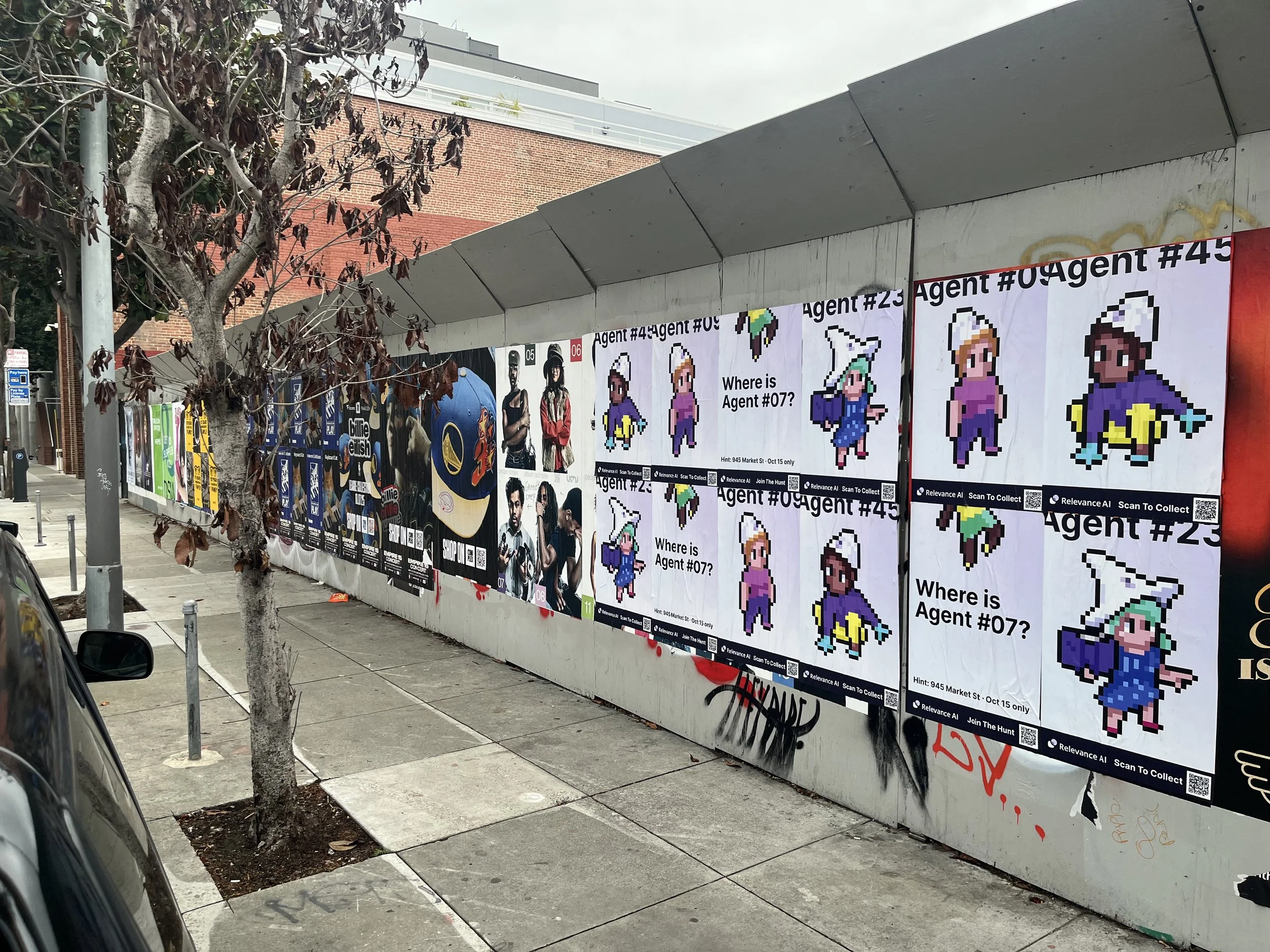
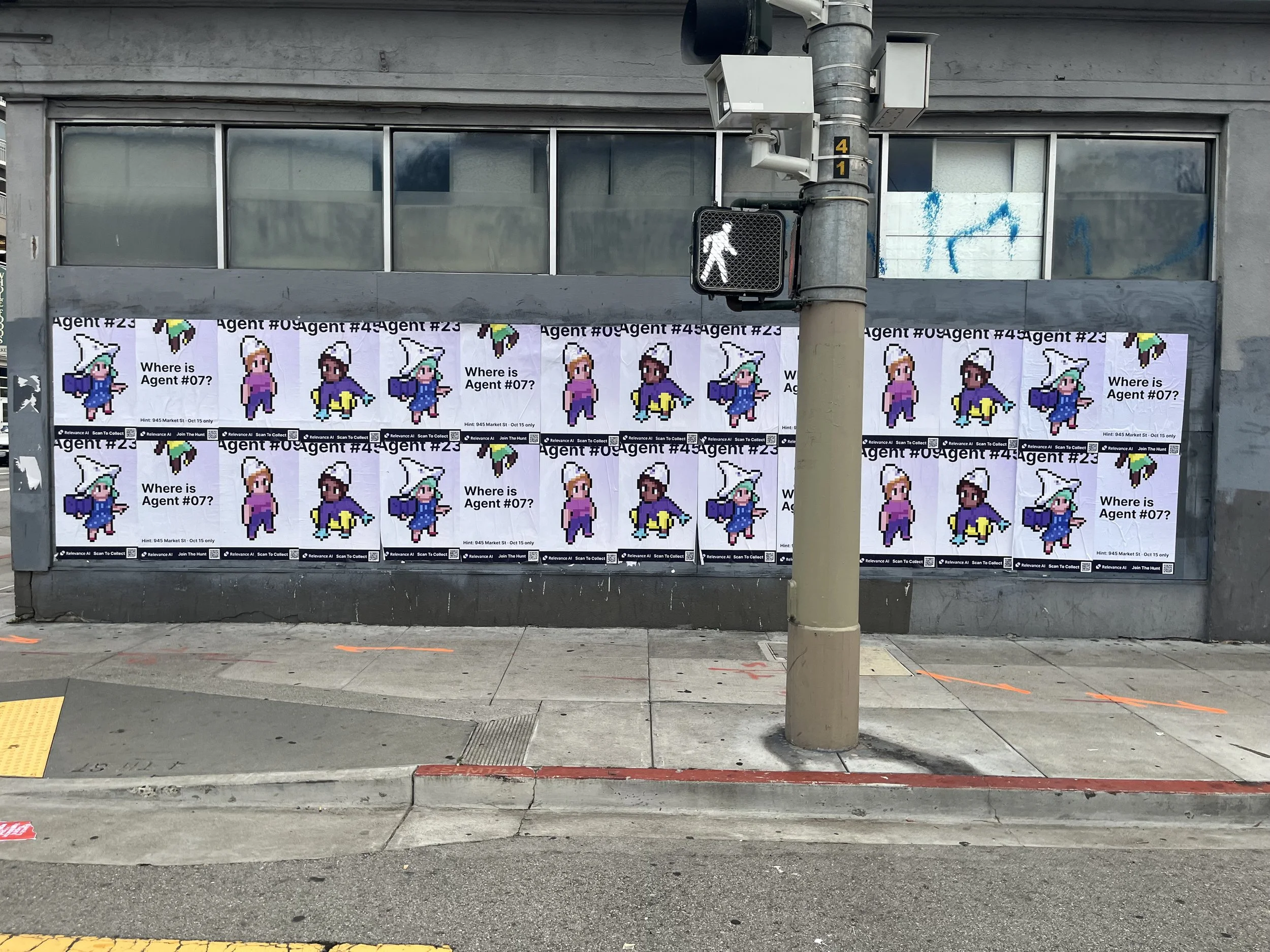
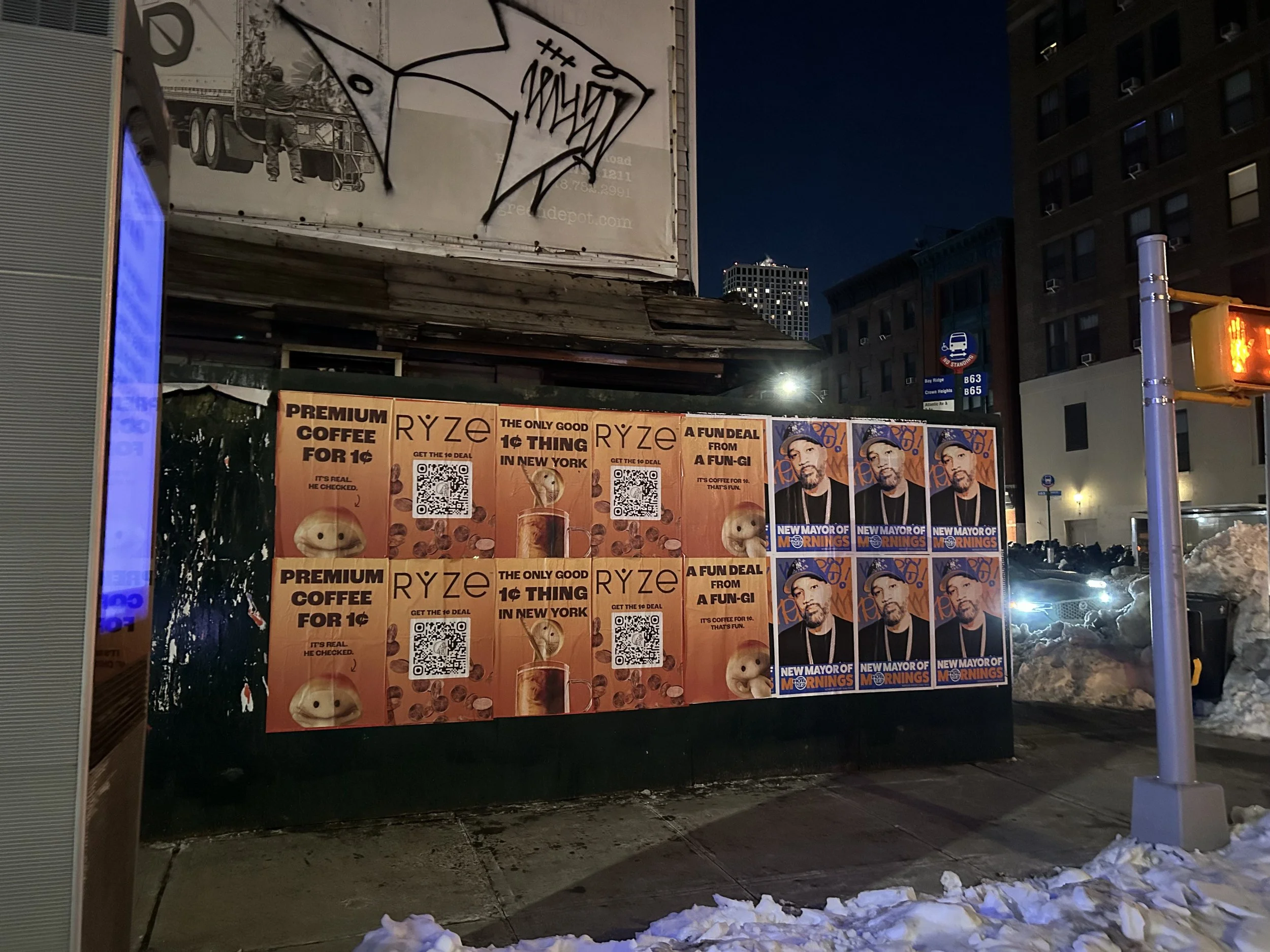
Montreal is one of North America’s most creative cities with a thriving arts, music, and nightlife culture. Districts such as Plateau Mont Royal, Mile End, and Downtown Montreal provide ideal environments for wheat pasting and fly posting campaigns. Street posters placed throughout these neighborhoods allow brands to connect with a highly creative and culturally engaged audience.
High Impact Guerrilla Marketing in Montreal Canada
our services
-
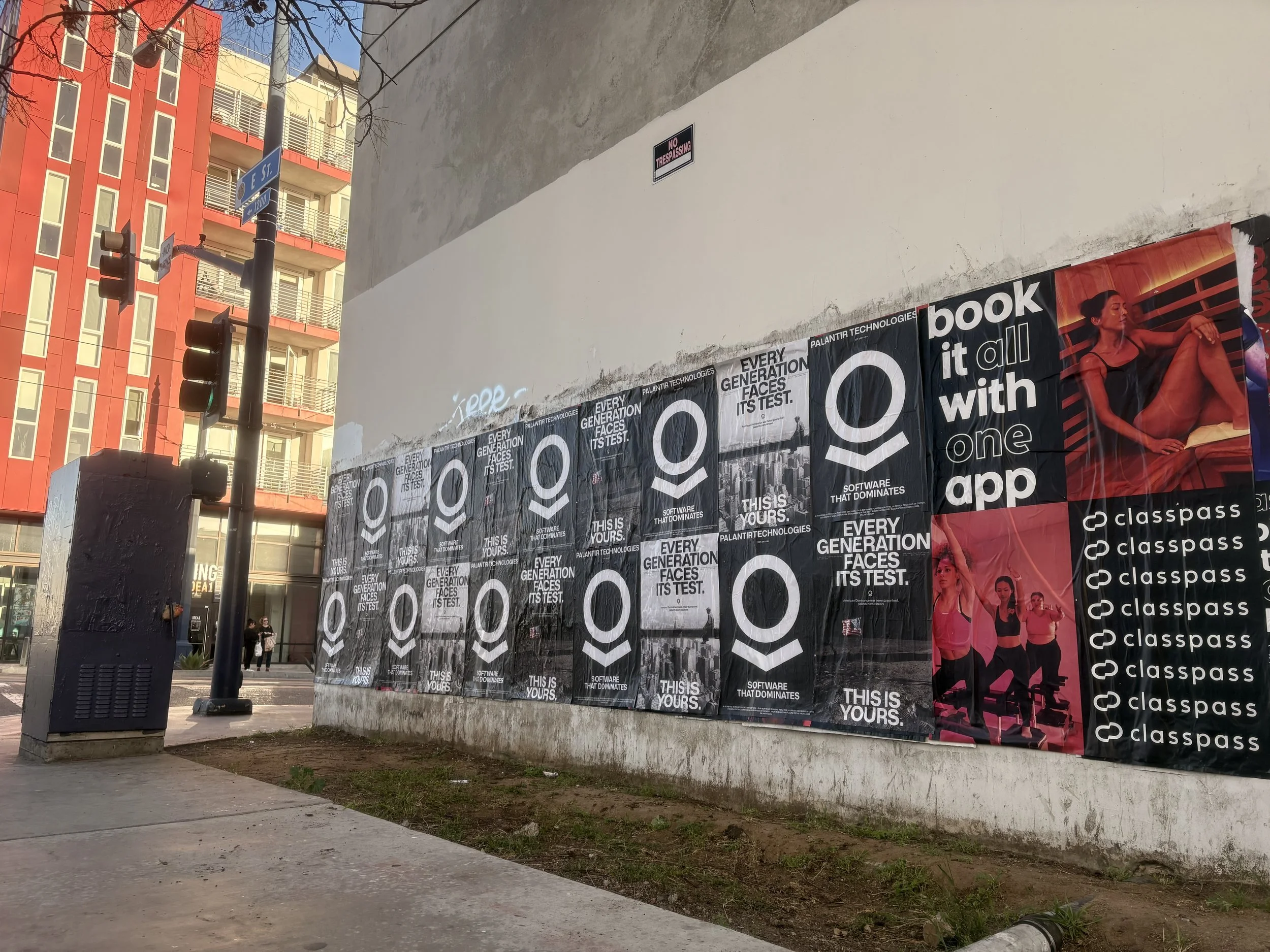
![what pasting campaign by sidewalk activations]()
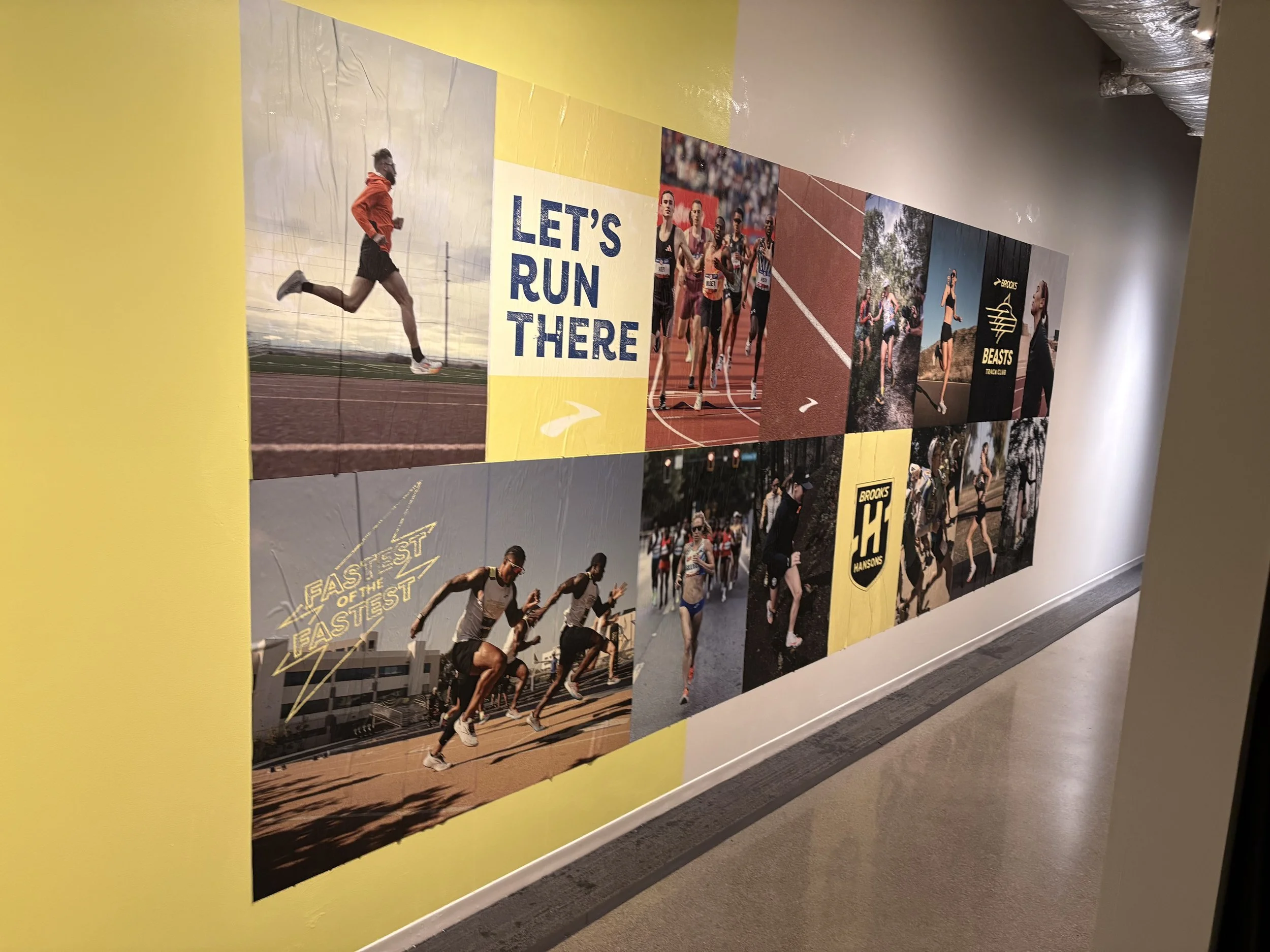
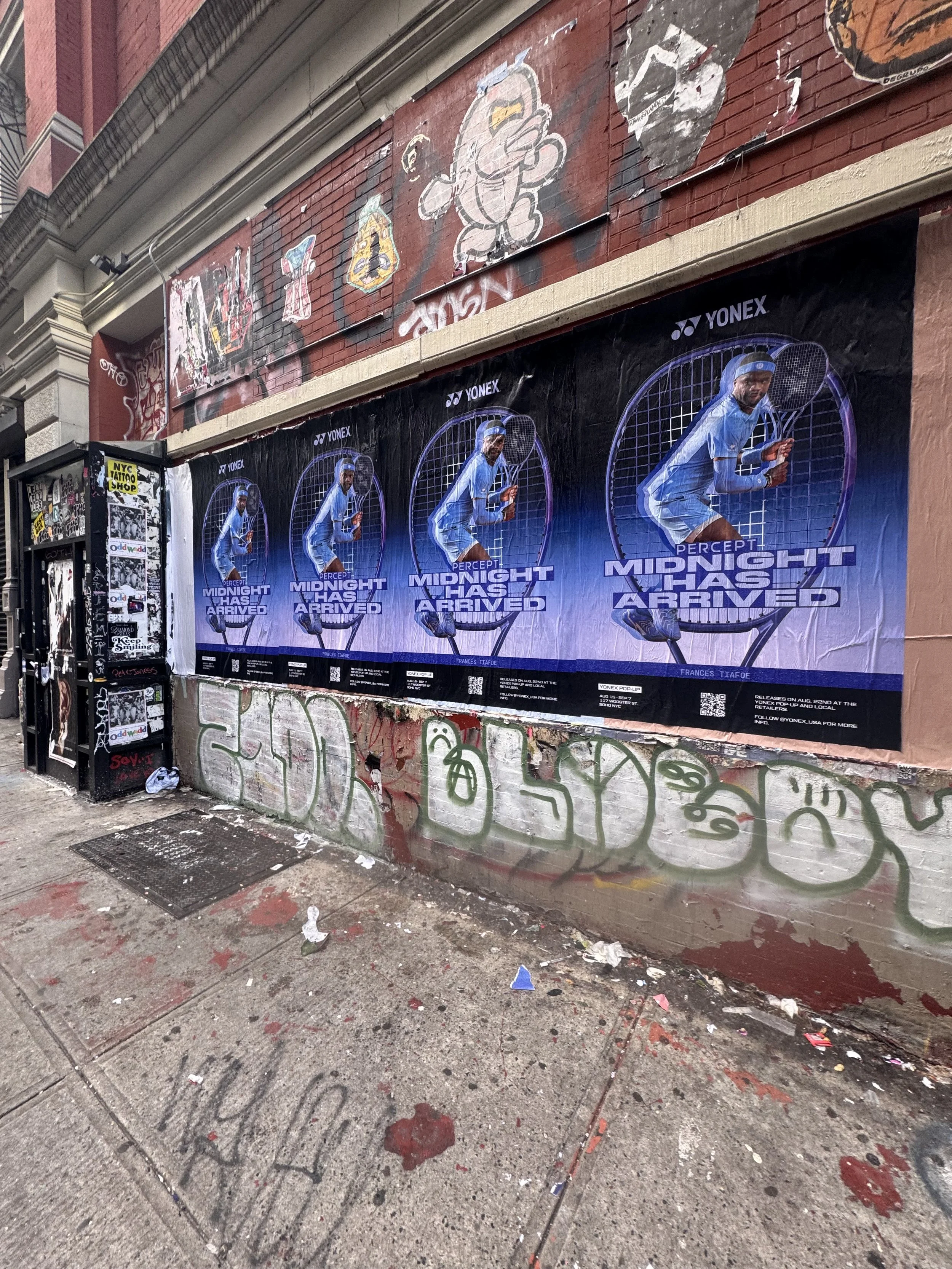
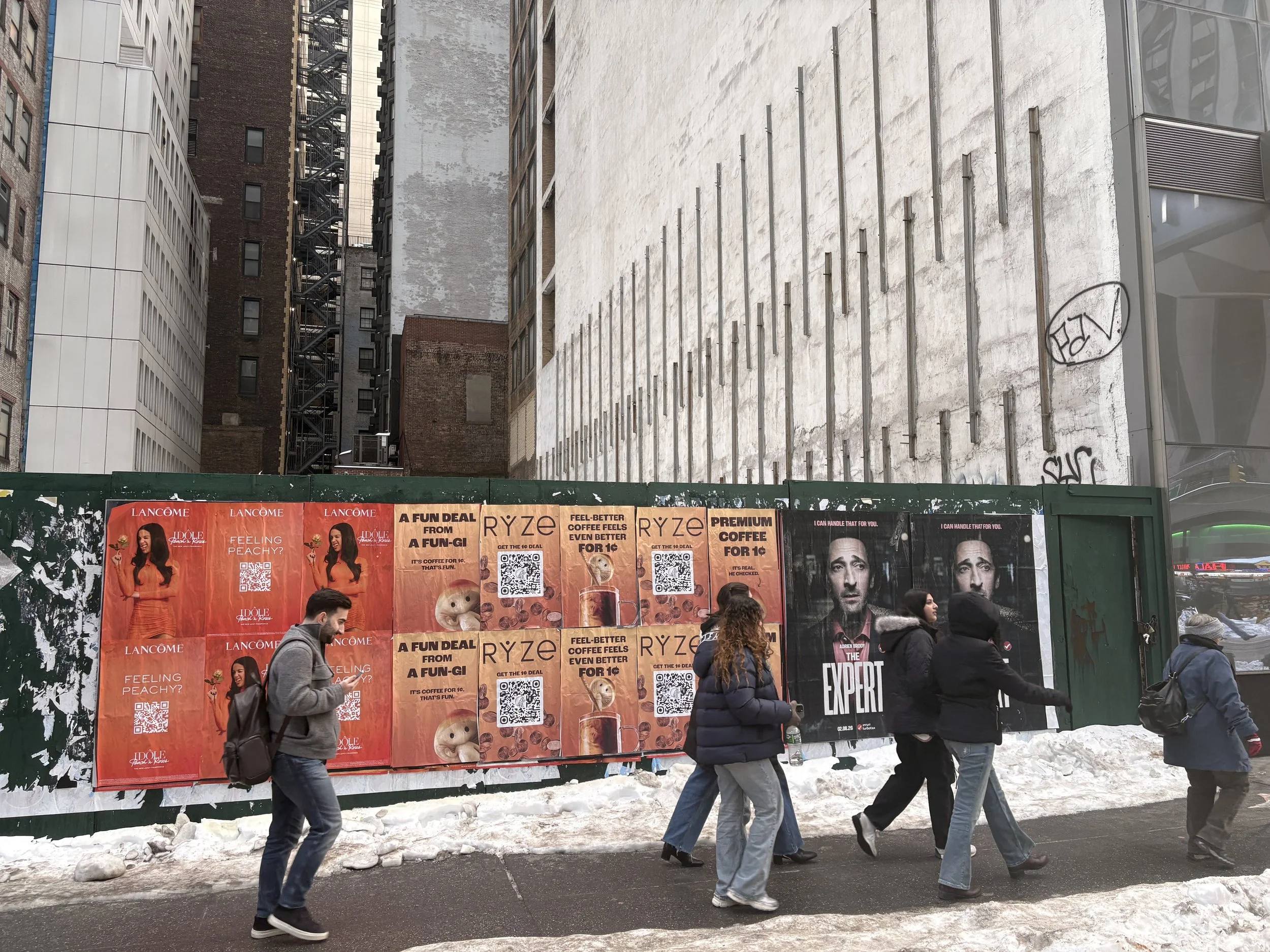
wheat paste posters
Large-format paper posters adhered to walls. Wheat pasting turns building facades into bold brand canvases.
-
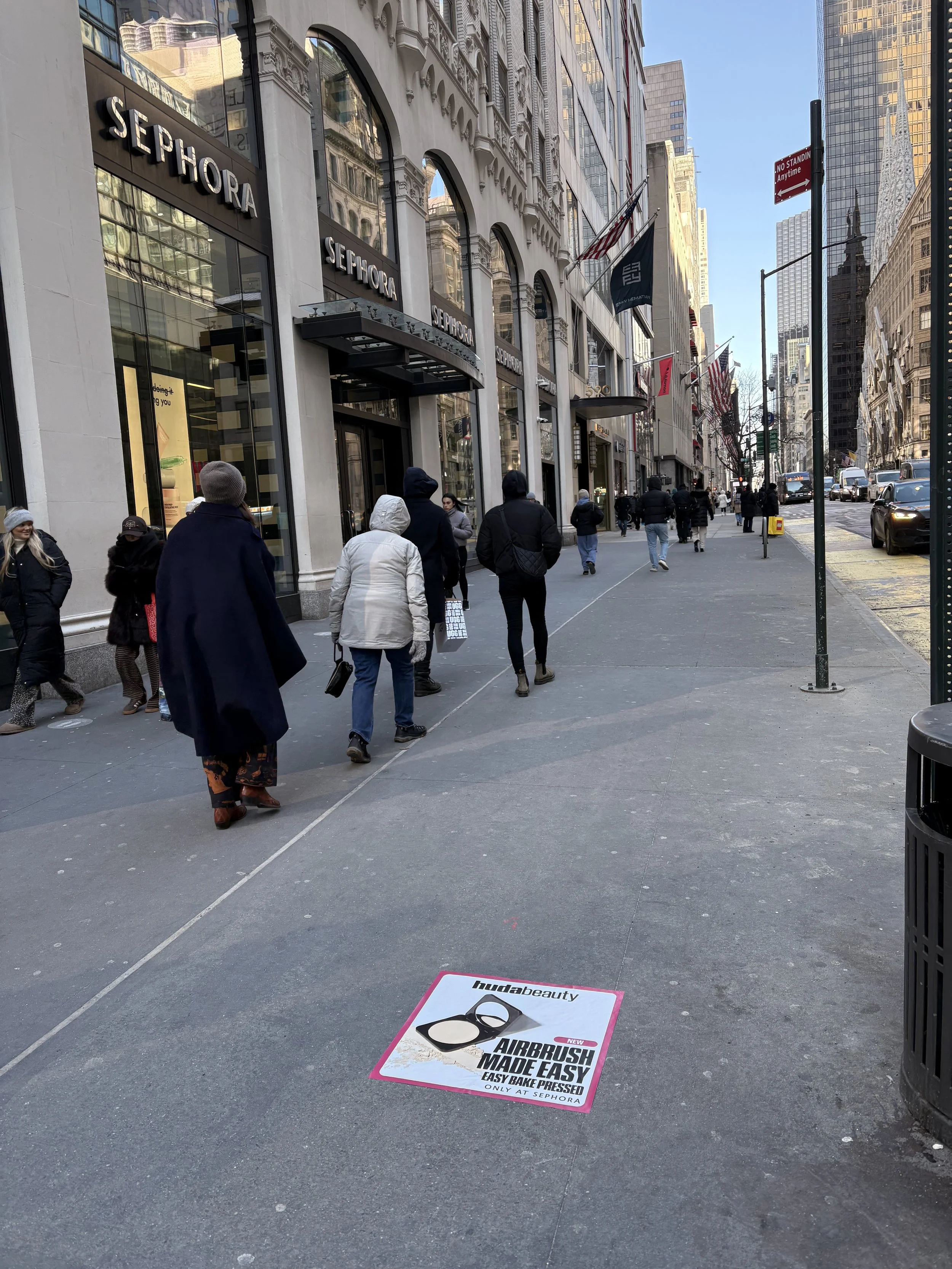
![Sidewalk decal/graphic in times square]()
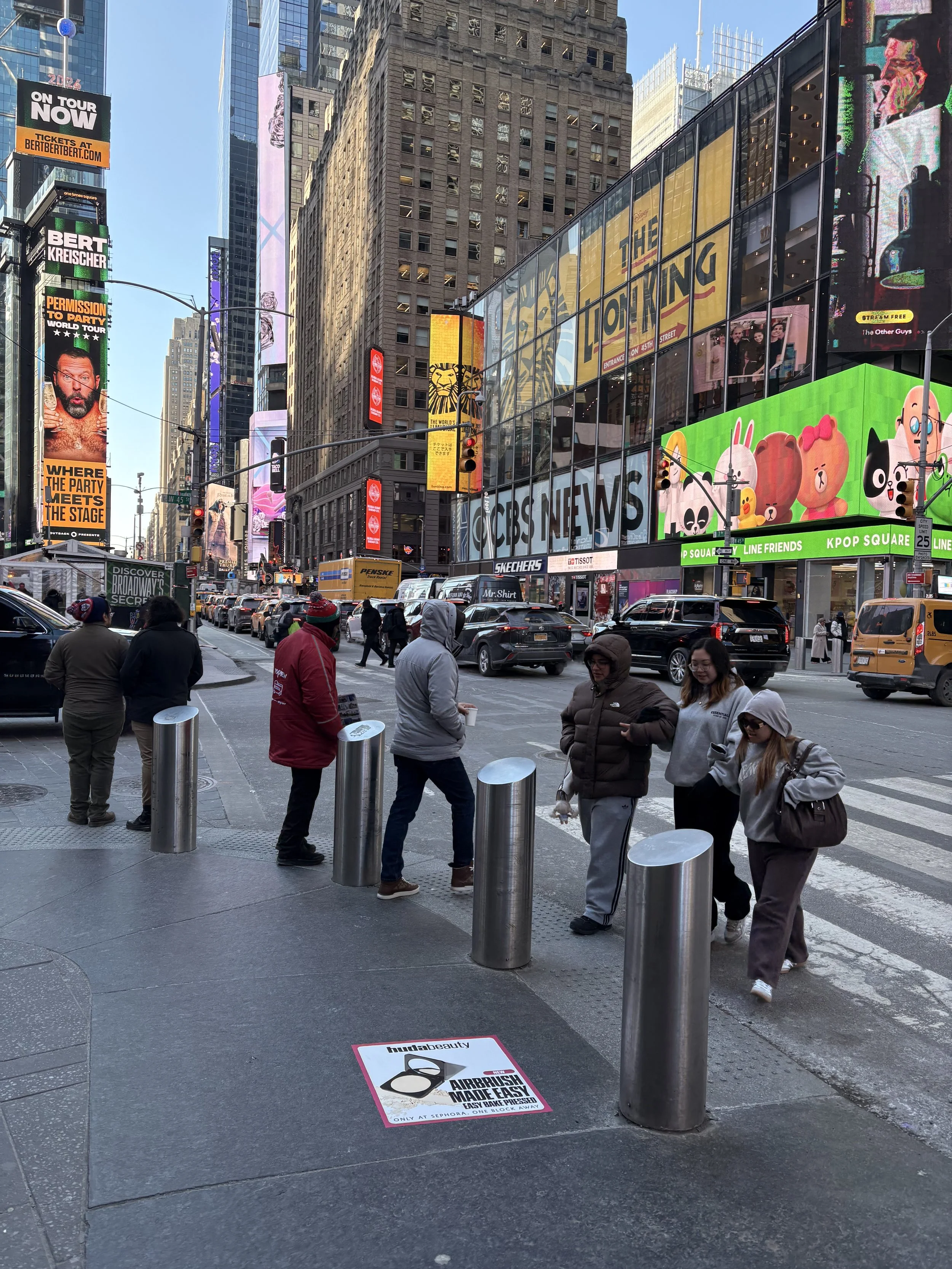
SIDEWALK DECALS
Decal advertising uses custom floor stickers applied directly to sidewalks and indoor surfaces, creating durable, high-impact brand touchpoints that withstand foot traffic and demand attention.
-
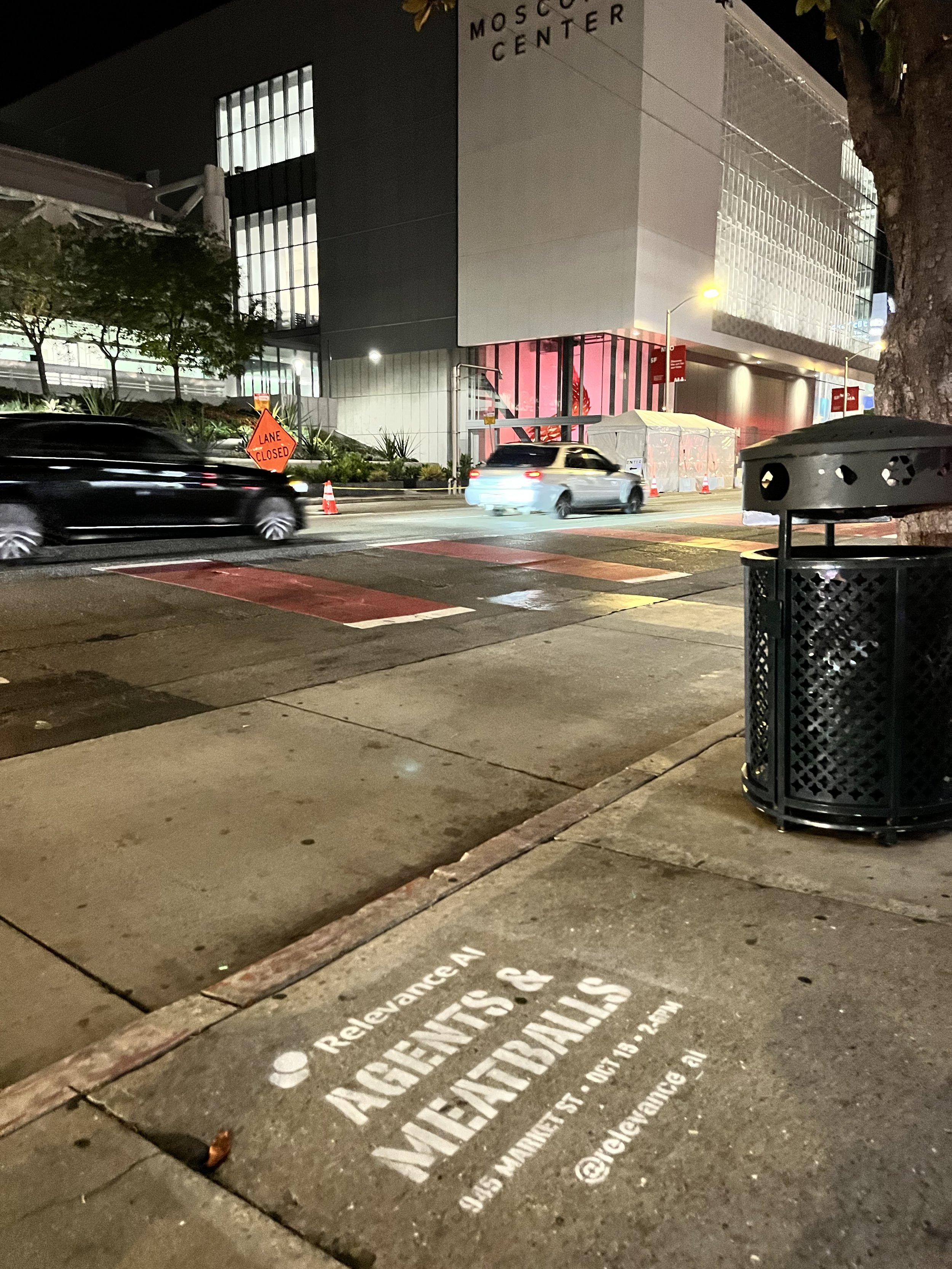
![sidewalk stencil in san francisco]()
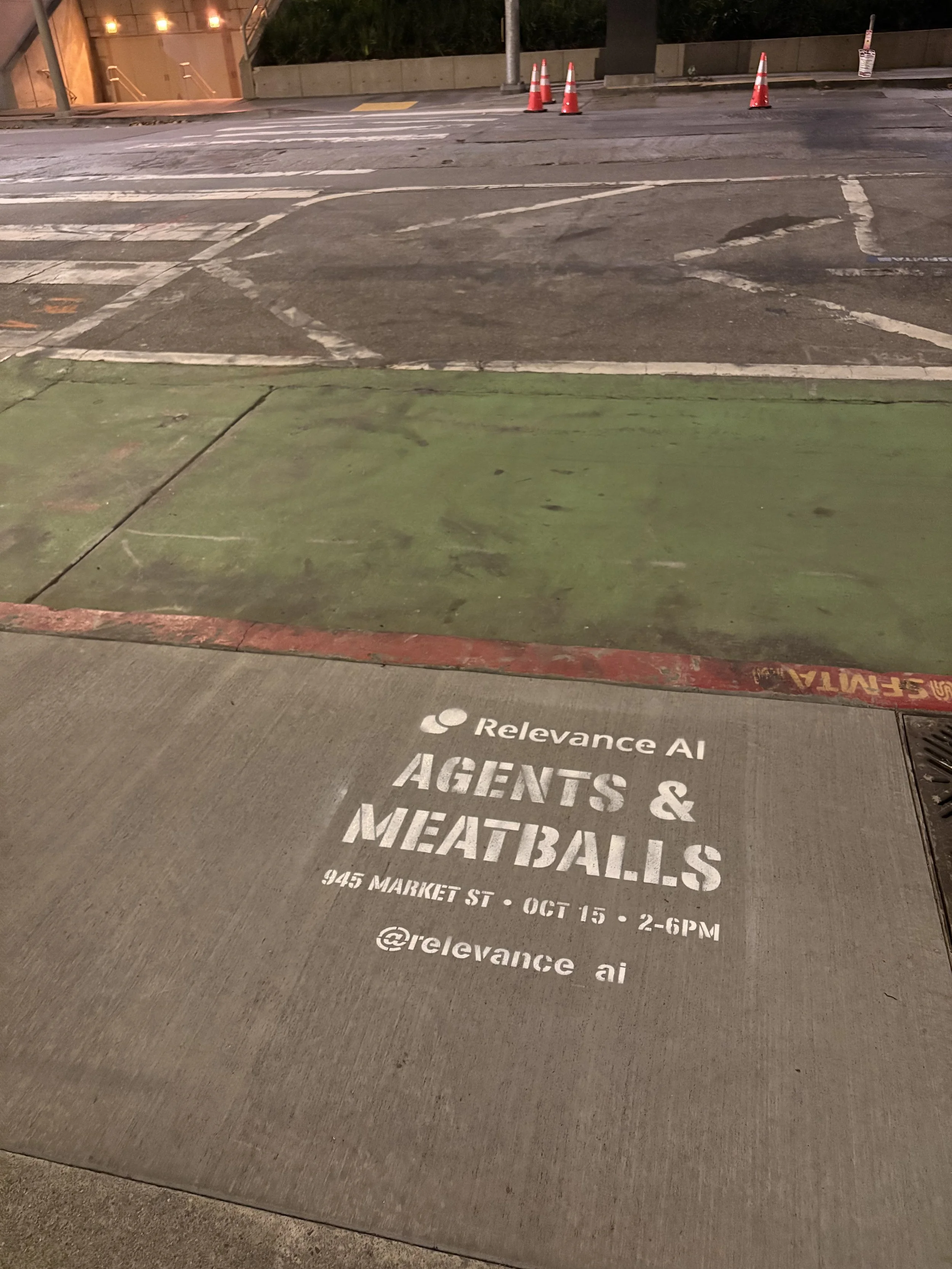
SIDEWALK STENCils
Custom-cut designs spray-painted onto sidewalks. Stencils create high-visibility messages that guide foot traffic and reinforce branding at street level.
-
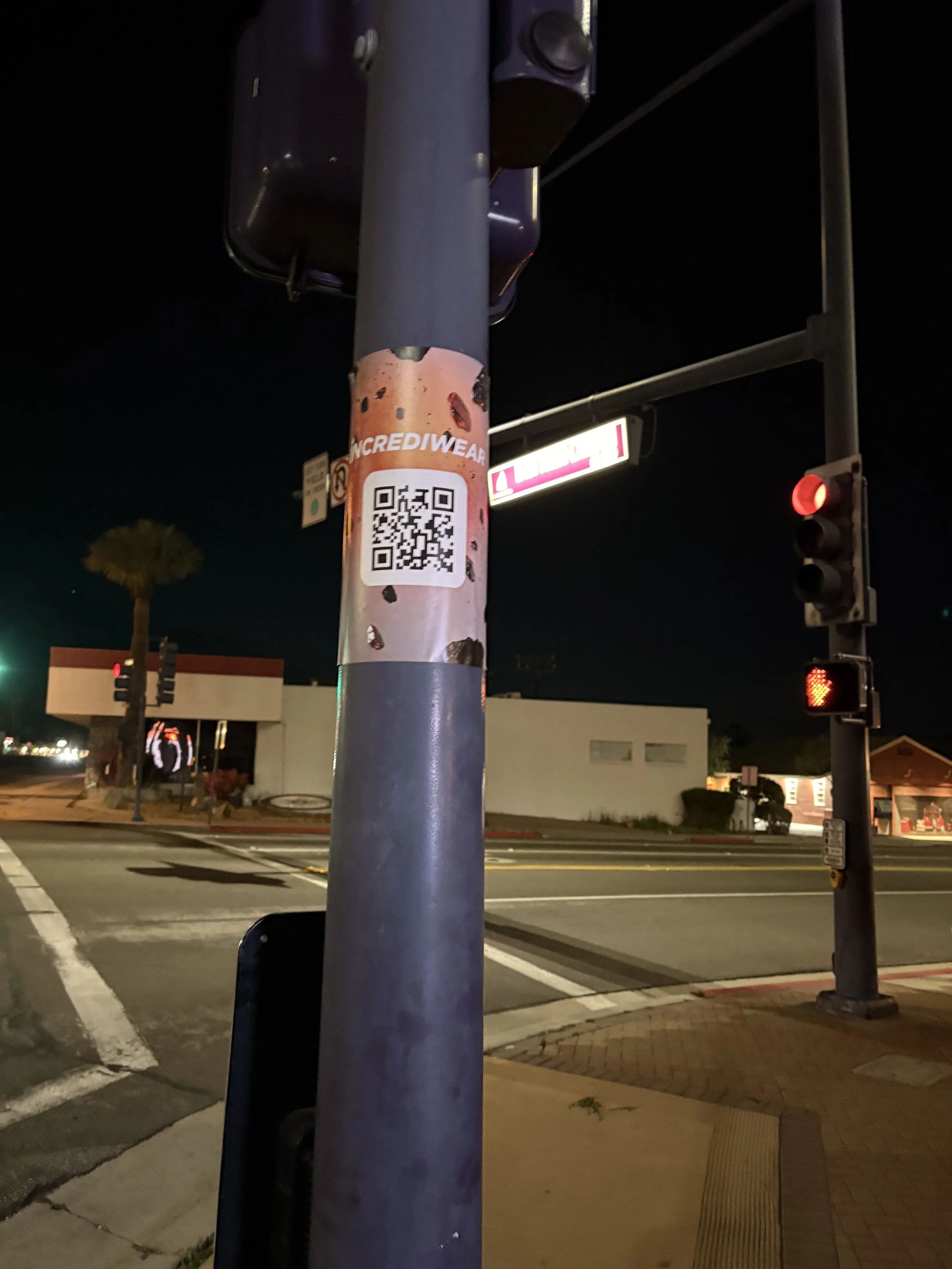
![Snipe advertisement by sidewalk activations]()
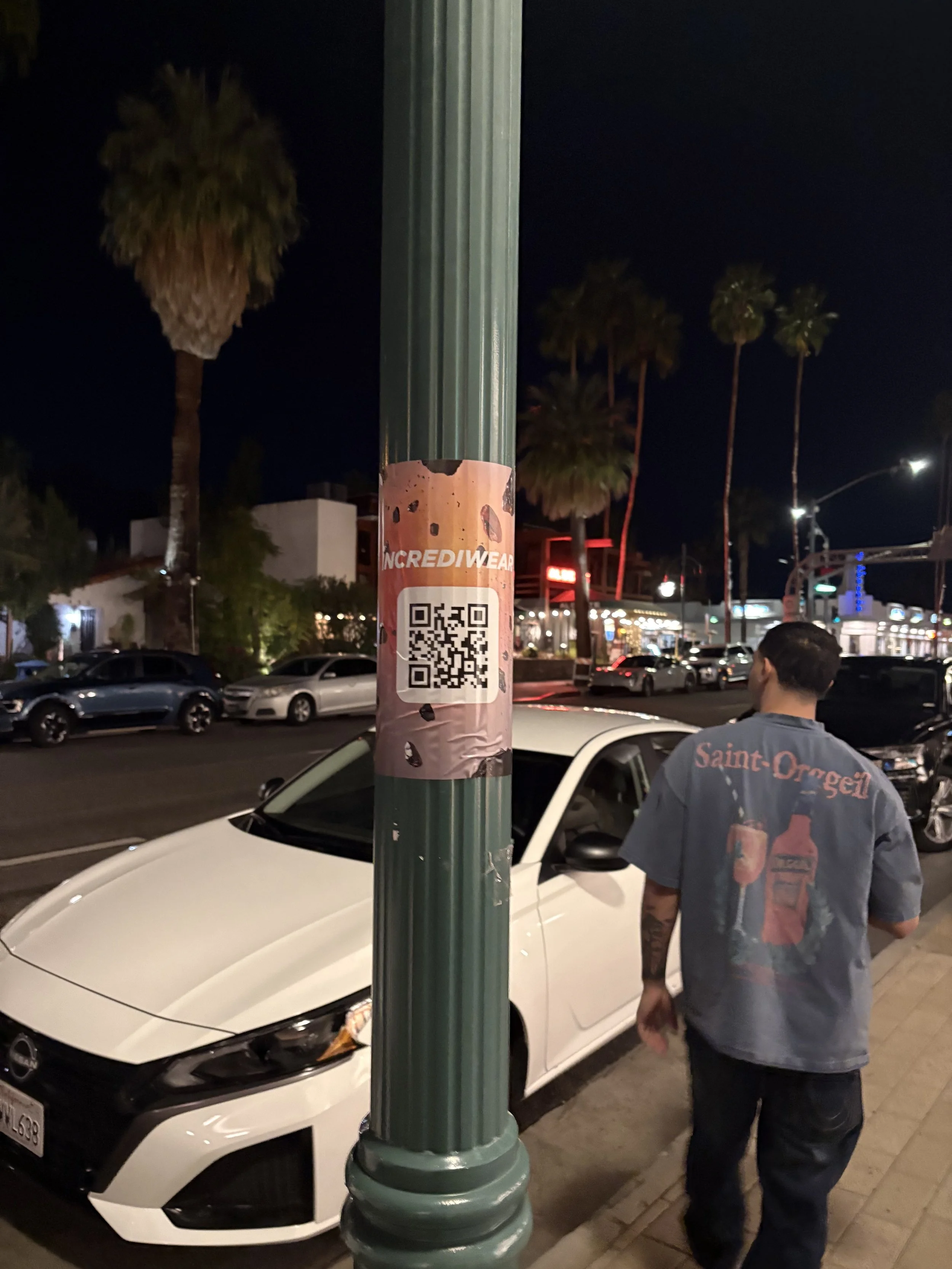
Snipe Ads
Snipe advertising places small 8.5" x 11" posters on poles, street lamps, and sign posts, capturing eye-level attention and building frequency throughout high-traffic corridors.
-
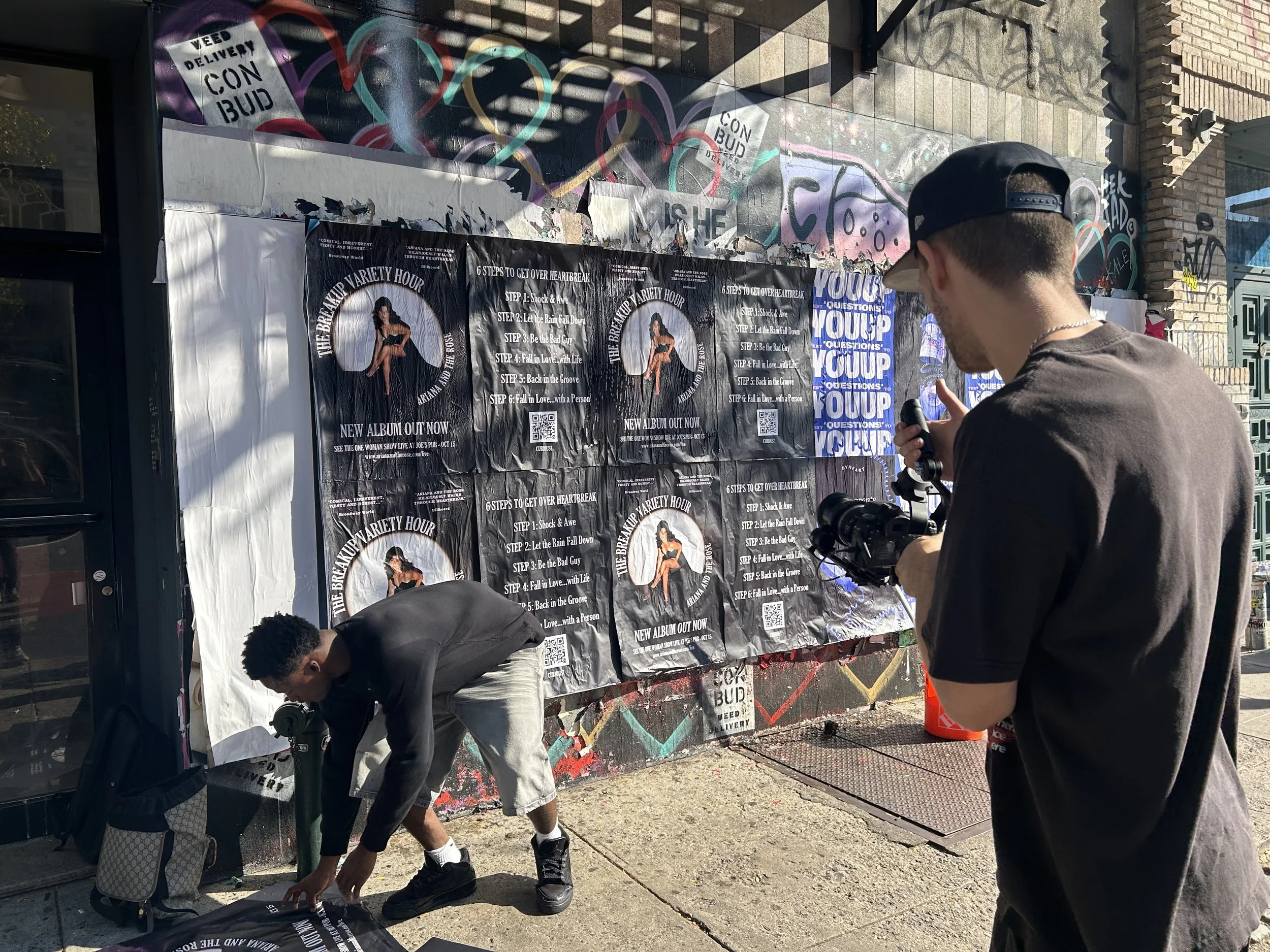
![wheat paste poster installation inside office]()
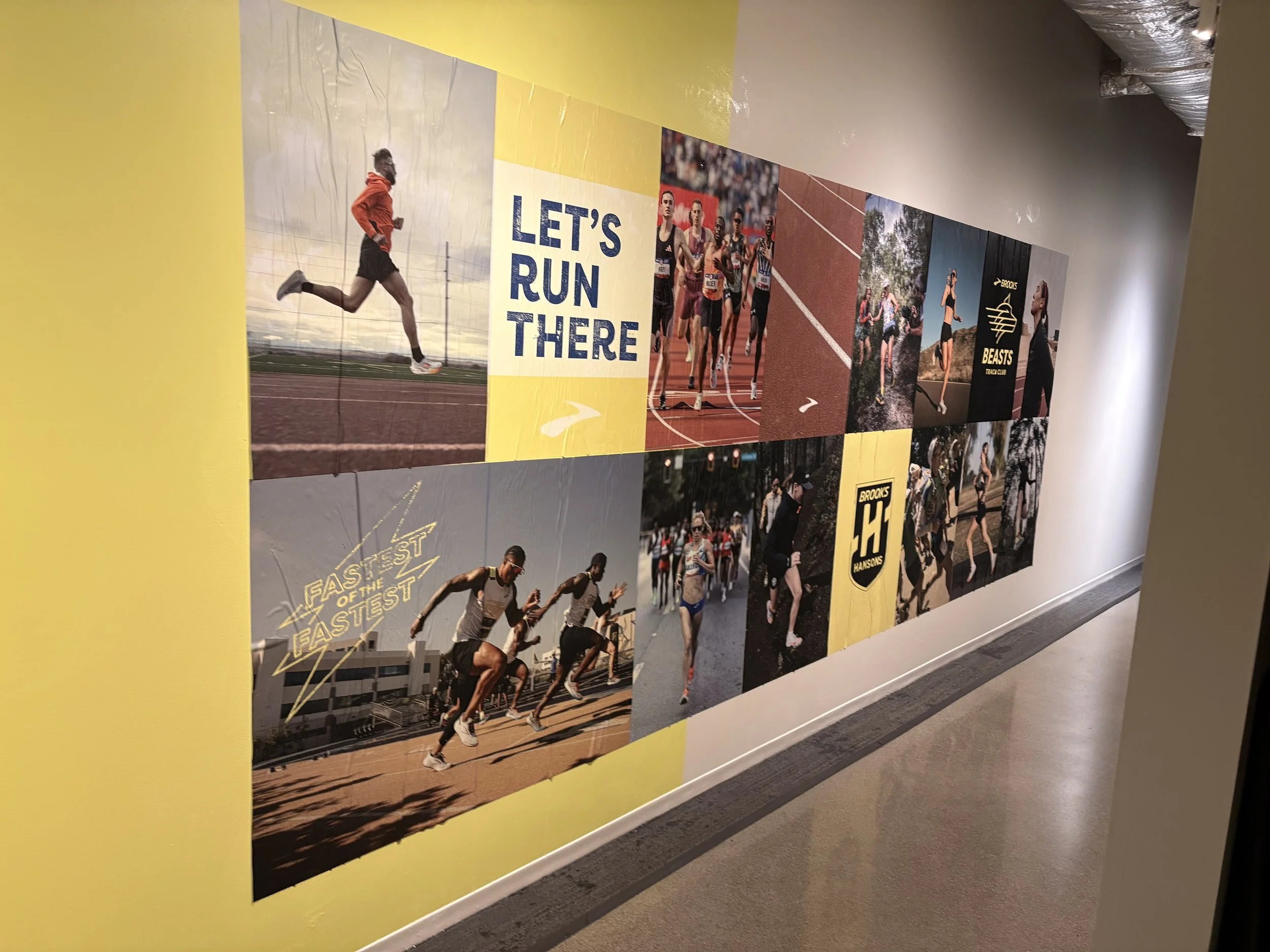
indoor wheat paste poster installs
indoor installation inside office space
contact us
Guerrilla Marketing in Montreal Canada
Montreal presents a landscape of extraordinary character and complexity, Canada's second-largest city and the largest French-speaking city in the Americas, with more than 77 officially recognized reference neighborhoods spread across 19 boroughs, each with its own identity, architectural heritage, and community rhythm . For a guerrilla agency like Sidewalk Activation, success here depends on understanding that Montreal is not a monolith but a federation of fiercely independent communities, from the cobblestone streets of Old Montreal to the colorful staircases of the Plateau, from the historic Irish enclaves of Griffintown to the vibrant multicultural energy of Parc-Extension. The city's unique character as a bilingual metropolis where French and English cultures intersect with waves of immigration from around the world creates a dynamic environment unlike any other in North America. Montreal welcomed 11.9 million visitors in 2025, a 7.3% increase from the previous year, with Canadian visitors reaching a record 8.8 million . The city's tourism economy generated $5.8 billion in spending, with food and accommodation accounting for nearly 75% of visitor expenditures . Montreal's hotel sector demonstrated remarkable strength, with more than 90 days of occupancy above 80%, a 7% increase from 2024 despite a 4% growth in available rooms . Looking ahead, 2026 promises to be a landmark year with the UCI Road World Championships in September—the most significant international sporting event in Montreal since the 1976 Olympics—along with the Formula 1 Grand Prix moving to May and a renewed festival season . The guerrilla marketer in Montreal must become fluent in the language of the city's neighborhoods, a navigator of its borough-specific regulatory environment where permit requirements vary by district, and a respectful participant in communities that have spent generations defining themselves through local institutions, public markets, and civic life.
The Ville-Marie borough forms Montreal's historic and urban heart, encompassing the downtown core, Old Montreal, Chinatown, and the Gay Village. Downtown Montreal lies at the foot of Mount Royal and extends toward the St. Lawrence River, with dozens of notable skyscrapers restricted by bylaw to the height of the mountain . Saint Catherine Street serves as the city's busiest commercial artery, lined with shops, restaurants, and entertainment venues . Place Ville-Marie, the I.M. Pei-designed cruciform office tower built in 1962, sits atop an underground shopping mall that forms the nexus of Montreal's underground city, the world's largest at 32 kilometers in length, giving its 500,000 daily visitors indoor access to 2,000 stores, 200 restaurants, 1,200 offices, 1,600 housing units, 10 metro stations, train stations, and tunnels extending all over downtown . Old Montreal offers cobblestone streets, historic architecture, and attractions including the Old Port, Place Jacques-Cartier, City Hall, Bonsecours Market, Notre-Dame Basilica, and the Pointe-à-Callière Museum . Chinatown, small but active, features Chinese and Vietnamese shops and restaurants concentrated along Saint Laurent Boulevard and La Gauchetière Street . The Gay Village, centered around the Beaudry metro station, is one of the largest gay villages in the world and hosts major events including Divers/Cité, which organizers estimate drew 1.4 million people in 2002 . This dense, multifaceted urban core requires campaigns that respect its layered character and navigate the complexities of high-traffic pedestrian environments.
The Plateau-Mont-Royal borough contains some of Montreal's most iconic and beloved neighborhoods. The Plateau itself boasts the highest population density in Montreal and the greatest number of creative people in Canada according to Statistics Canada, and is the urban place where the most people travel mainly by foot, bicycle, or public transport . In 1997, Utne Reader magazine included the Plateau Mont-Royal in its list of "15 Hippest places to live." The exterior staircase is a distinctive feature of the neighborhood's architecture, with colorful staircases adorning triplexes and duplexes throughout . The tiny Mile End district, officially part of the Plateau but generally considered distinct, is home to many Montreal artists and filmmakers, with the city's two famous bagel emporia—Fairmount Bagel and St-Viateur Bagel—located on the streets of the same names . Fairmount Street is also home to Wilensky's, immortalized in Mordecai Richler's novel and film "The Apprenticeship of Duddy Kravitz." The area has become noticeably more cash-rich in recent years, due in part to the presence of the Ubisoft studios on Saint Laurent Boulevard, and is home to many art galleries, designers, and boutiques . Little Portugal, at the corner of Saint-Laurent Boulevard and Rachel Street, reflects Montreal's modest Portuguese population with businesses along several blocks of Saint-Laurent between Pine and Marie-Anne, an area that has largely absorbed what used to be the traditional Jewish neighbourhood . The Plateau's creative, walkable character demands campaigns that match its artistic energy and respect its residential fabric.
Le Sud-Ouest borough holds some of Montreal's most historically significant neighborhoods. Griffintown, directly southwest of downtown and west of the old harbour, was home to thousands of Irish immigrants in the 19th century, many of whom worked for the railway and on massive local projects such as the Victoria Bridge . Roughly six thousand Irish immigrants died in fever sheds at nearby Windmill Point during the typhus epidemic of 1847, commemorated by a black rock near the Victoria Bridge . The Irish community claims the neighbourhood as a lieu du mémoire because of its significance as one of the earliest sites of Irish immigration in North America . After decades of industrial decline following World War II, Griffintown has undergone massive change in recent years, with major condo projects springing up and old urban geography vanishing by the day . Pointe-Saint-Charles, south of downtown between the Lachine Canal and the St. Lawrence River, was originally a mainly English-speaking Irish working-class neighborhood developed around factories and Victorian-era industry, with a documented reputation as one of the poorest in Montreal and one of the roughest in Canada . Gentrification has recently begun to give the area new life. Saint-Henri, Petite-Bourgogne, and Côte-Saint-Paul complete the borough's tapestry of historic working-class communities now experiencing transformation. These neighborhoods reward brands that understand their layered histories and approach gentrification-related change with sensitivity.
Rosemont–La Petite-Patrie offers family-friendly environments with distinct cultural touches. Little Italy, located on St. Lawrence Boulevard between Jean-Talon and St. Zotique, is home to Montreal's original Italian Canadian community . Although many Italians in Montreal have since moved to other parts of town, Little Italy has not lost its heritage, with a large collection of Italian restaurants, bars, and shops . The Jean-Talon Market, one of Montreal's largest public markets, draws food lovers from across the city. Saint-Léonard borough, further east on Jean-Talon Boulevard, is nicknamed Città Italiana and can be considered Montreal's second Little Italy, home to Montreal's Via Italia and cultural centers including The Leonardo Da Vinci Centre with theaters, gyms, bocce playing areas, and a cafe . Services in Saint-Léonard are offered in English, French, and Italian, reflecting the borough's prominent Italian Canadian community . These neighborhoods require culturally competent engagement that respects their heritage while serving current residents.
Côte-des-Neiges–Notre-Dame-de-Grâce stands as one of Montreal's most diverse boroughs, where each corner tells a story and cultural diversity is at the heart of its essence . Students, families, professionals, and newcomers find their home here, with the iconic Saint Joseph's Oratory anchoring the landscape alongside the city's largest teaching and health institutions and family-oriented neighborhoods with sought-after heritage architecture . Snowdon, Édouard-Montpetit, and Loyola offer distinct residential characters within the borough. Villeray–Saint-Michel–Parc-Extension offers a true gem with numerous well-maintained parks and green spaces contributing to its unique and friendly neighborhood life . Easily accessible from all corners of the city, it has a large stock of rental housing, and its commercial streets are at the heart of genuine neighborhoods animated by people of all origins . Parc-Extension, in particular, is known for its vibrant Greek and South Asian communities.
Montreal's regulatory environment for guerrilla marketing requires careful navigation, with rules varying significantly by borough. Distribution of advertising materials such as pamphlets, circulars, brochures, and leaflets is regulated at the borough level, with some districts requiring permits and others allowing distribution under specific conditions . In Le Plateau-Mont-Royal, a permit is required for distribution, costing $134 and valid for a maximum of seven days per distribution, with distribution permitted between 7 a.m. and 10 p.m. but prohibited in public places . In Ville-Marie, distribution is permitted without extra cost for those holding a valid commercial and professional activity permit . In Saint-Laurent, commercial prospectuses require a permit costing $75 per distribution for up to seven days or $2,180 for an annual permit, while non-commercial flyers are free . Across all boroughs, it is forbidden to leave any paper on a motor vehicle parked on public property, with only parking tickets and police courtesy notices authorized . Door-to-door solicitation requires a permit costing $25 per person, valid for up to 12 months, and is only permitted from 9 a.m. to 8 p.m. daily . No person may solicit, advertise, sell, carry on any trade or craft, or do business on sidewalks or in streets or public places, meaning activations must occur on private property with permission or in permitted venues.
For digital billboard advertising, most boroughs require contacting commercial companies directly, though some offer free space for non-profit organizations promoting municipal activities or community events . In L'Île-Bizard–Sainte-Geneviève, eligible non-profit organizations, public health and safety groups, and educational institutions may post messages free of charge for up to 14 days, but only in French and messages must not be commercial or partisan . In Pierrefonds-Roxboro, similar eligibility applies with 10-day posting durations . These borough-specific variations require early research and close coordination with local authorities.
Montreal's major events create concentrated opportunities for engagement. The Formula 1 Grand Prix, now moved to May starting in 2026, promises to recreate the historic performance observed in June . The Just for Laughs festival, the Montreal International Jazz Festival, and dozens of other festivals throughout the summer reinforce Montreal's positioning as the festival capital of North America . The 2026 UCI Road World Championships in September, with more than 10 days of competition from September 20 to 27, represents the most significant international sporting event in Montreal since the 1976 Olympics . However, Montreal's bid to host 2026 FIFA World Cup matches was withdrawn in 2021 after the provincial government of Quebec withdrew financial support, with Vancouver ultimately replacing Montreal as a Canadian host city . The Olympic Stadium's structural problems and exorbitant renovation costs, combined with CF Montreal's Stade Saputo being too far short of the required 40,000 capacity, made Montreal's participation unfeasible . Despite this disappointment, the UCI Championships and renewed festival season promise strong visitor numbers.
The tourism trends of 2025 offer valuable insights for guerrilla marketers. Canadian visitors drove growth with a 10% increase to 8.8 million, particularly from Atlantic Canada at 17% growth . U.S. arrivals ended the year down 5%, with a July decline reaching 12% before recovering somewhat . International markets rose 2%, with France standing out at more than 470,000 visitors . Booking patterns have shifted significantly, with travelers planning only about 50 days in advance instead of the usual 90, reflecting uncertainty in the economic and geopolitical environment . This shorter planning window means campaigns must be agile and responsive, capable of activating quickly when opportunities arise.
Throughout this diverse and dynamic landscape, Sidewalk Activation brings deep local knowledge, regulatory expertise, and authentic community relationships to every Montreal campaign. We understand that Montreal is a city of 19 boroughs and 77 reference neighborhoods, from the historic Irish enclaves of the Sud-Ouest to the creative energy of Mile End, from the multicultural diversity of Parc-Extension to the Italian heritage of Little Italy and Saint-Léonard. We know that the city's borough-specific regulatory environment requires early research and careful compliance, with permit requirements varying from $134 in the Plateau to free distribution in Ville-Marie for permit holders . We track the tourism data showing 11.9 million visitors spending $5.8 billion, with Canadian travelers leading the recovery and French visitors reaching record numbers . We monitor the major events on the horizon, from the May Grand Prix to the September UCI World Championships, and design campaigns that capture these moments while respecting the communities that call Montreal home . In a city of nearly 2 million residents, 19 boroughs with distinct regulatory regimes, and the most significant sporting event in 50 years on the horizon, the brands that win are those that show up with respect, authenticity, and genuine commitment to the communities they seek to engage.
For more information, please contact us at info@sidewalkactivations.com.
SIDEWALK activation packages
At Sidewalk Activations, we specialize in four of the most impactful forms of street-level marketing: wheat pasting posters, sidewalk stencils, custom decals, and snipe advertising. Each format delivers bold visibility where it matters most—on the streets, in front of real people, in the middle of their daily routines. We don't just create ads—we create moments of discovery that spark curiosity, engagement, and conversation.
Sidewalk stencils are one of our signature tools. With custom-cut designs ranging from 6" x 60" up to 48" x 48", our stencils are built to stand out in high-traffic areas. Placed directly onto sidewalks and pavements with eco-friendly, temporary marking paint, these visuals are impossible to miss. They guide foot traffic, reinforce branding, and create a breadcrumb trail effect that leads people straight to your event, pop-up, or storefront.
Wheat pasting, on the other hand, gives brands a canvas that's larger-than-life. Our posters range from 24" x 36" to 48" x 72", transforming city walls into storyboards for your brand. From single-block takeovers to massive citywide campaigns, our wheat pasting is precise, creative, and always positioned in the neighborhoods that matter most for your audience.
Custom sidewalk decals offer a durable, high-impact alternative that sticks directly to pavement and interior floors. Available in sizes like 24" x 24", 17-inch circles, or fully custom shapes, our decals are built to withstand foot traffic while delivering crisp, vibrant branding. Perfect for guiding customers, reinforcing messages, or creating interactive floor experiences.
Snipe advertising adds the final layer to our street-level toolkit. These 8.5" x 11" posters are hand-placed on poles, street lamps, and sign posts—capturing attention at eye level in the moments between destinations. Small but mighty, snipes create frequency and reinforce your message throughout high-traffic corridors.
What makes Sidewalk Activations unique is how we combine these four formats into fully integrated campaigns. By weaving together wheat paste visuals, strategic stencil placements, durable decals, and snipe frequency, we ensure your brand connects with people from every angle—above eye level, at eye level, and beneath their feet. Each campaign is mapped, documented, and executed with attention to detail that guarantees your message not only lands but resonates.
WHEAT PASTING PACKAGE
Bring your brand to the streets with bold, large-format posters that dominate city walls and high-traffic neighborhoods. Our wheat pasting campaigns are fully mapped and strategically executed to maximize visibility where your audience lives, works, and plays. With poster sizes ranging from standard 24" x 36" to jumbo 48" x 72", we create campaigns that leave a lasting impression.
Each package includes:
Professional design consultation
Strategic placement in key locations
Full documentation of all poster hits
Options for single-block takeovers or citywide activations
SIDEWALK STENCILS PACKAGE
Put your message right where people walk. Our sidewalk stencils range in size from 6" x 60" up to 48" x 48", applied using eco-friendly, temporary paint in prime foot-traffic zones like shopping districts, event areas, subway exits, and nightlife hubs. With precise mapping and professional execution, stencils create a breadcrumb trail effect that guides pedestrians directly to your brand.
Each package includes:
Custom stencil design + production
Strategic deployment across 25–200+ hits depending on campaign scale
Eco-friendly paint applications
Documentation of all placements
CUSTOM DECALS PACKAGE
Make your mark stick with durable, high-impact custom decals. Available in 24" x 24", 17-inch circles, or fully custom shapes, our decals are designed to withstand heavy foot traffic while maintaining vibrant, crisp branding. Perfect for retail floors, indoor activations, sidewalk placements, and event spaces.
Each package includes:
Custom decal design + production
Durable, slip-resistant materials
Strategic placement in high-traffic zones
Full documentation of all installations
SNIPE ADVERTISING PACKAGE
Own the poles, street lamps, and sign posts. Our 8.5" x 11" snipe posters are hand-placed at eye level throughout high-traffic corridors, creating frequency and reinforcing your message in the moments between destinations. Small format, big impact.
Each package includes:
Custom snipe design + printing
Strategic placement on poles, street lamps, and sign posts
25–500+ placements depending on campaign scale
Full documentation of all hits
FULL IMPACT PACKAGE (WHEAT PASTING + STENCILS + DECALS + SNIPES)
For brands that want to completely own the streets, our combined package leverages the power of all four formats. Large-format posters dominate the visual landscape. Stencils reinforce the message at ground level. Decals create durable, lasting touchpoints. Snipes add frequency at eye level. Together, they create a multi-layered, high-impact experience that's impossible to ignore. Perfect for pop-ups, product launches, and nationwide rollouts.
Each package includes:
Complete wheat pasting campaign (24" x 36" up to 48" x 72")
Sidewalk stencil activations (25–200+ placements)
Custom decal installations (various sizes)
Snipe advertising placements (25–500+ hits)
Strategic mapping and placement for maximum visibility
Full campaign documentation + photos for reporting
Nationwide and international deployment
Contact us at info@sidewalkactivations.com to start your campaign today.
Frequently Asked questions Montreal Canada
Montreal is a city of 19 boroughs and more than 77 officially recognized reference neighborhoods, from the Plateau's colorful staircases to Griffintown's historic Irish roots . How does that diversity shape your guerrilla marketing approach?
Montreal's identity is woven into its neighborhoods, each with its own history, architectural character, and community rhythm. The Plateau Mont-Royal boasts the highest population density in Montreal and the greatest number of creative people in Canada, with Utne Reader including it in its list of "15 Hippest places to live" . Mile End, officially part of the Plateau but generally considered distinct, is home to countless artists and filmmakers, with the city's famous Fairmount and St-Viateur bagel bakeries anchoring the neighborhood . At Sidewalk Activation, we treat each borough and neighborhood as its own micro-market with a unique cultural fingerprint. The historic, working-class character of Pointe-Saint-Charles, with its Irish heritage and reputation as one of the poorest and roughest neighborhoods in Canada, now experiencing gentrification, demands a completely different approach than the tourist-oriented cobblestone streets of Old Montreal or the commercial energy of Downtown's Saint Catherine Street . Our guerrilla strategy is about matching the neighborhood's rhythm, whether that means activating along the Lachine Canal in Saint-Henri or creating experiences during the Plateau's summer street festivals. For more information, please contact us at info@sidewalkactivations.com.
Montreal welcomed 11.9 million visitors in 2025, a 7.3% increase, with Canadian visitors reaching a record 8.8 million . How do you balance visitor engagement with respect for permanent residents?
Montreal's tourism economy is robust, generating $5.8 billion in spending with food and accommodation accounting for nearly 75% of visitor expenditures . Canadian travelers drove the growth at 10%, with Atlantic Canada leading at 17%, while U.S. arrivals ended the year down 5% and international markets rose 2% with France standing out at more than 470,000 visitors . The visitor corridors—Old Montreal, Downtown, the Plateau during festivals—demand campaigns that capture tourists in discovery mode. But residential neighborhoods like Rosemont–La Petite-Patrie, with its family-friendly character and Little Italy heritage, require authentic engagement that serves permanent residents . Sidewalk Activation treats these two audiences separately while finding intersections where they naturally overlap. The Jean-Talon Market in Little Italy draws both visitors seeking local flavor and residents doing their weekly shopping . The Lachine Canal path attracts tourists on bikes alongside local runners and walkers . The magic happens at places like these, where both audiences gather and brands can create shared experiences. For more information, please contact us at info@sidewalkactivations.com.
Montreal's regulatory environment for guerrilla marketing varies significantly by borough, with some requiring permits and others allowing distribution under specific conditions . How do you navigate this complexity?
Montreal's borough-specific regulations require careful navigation. In Le Plateau-Mont-Royal, distributing advertising materials requires a permit costing $134, valid for a maximum of seven days per distribution, with distribution permitted between 7 a.m. and 10 p.m. but prohibited in public places . In Ville-Marie, distribution is permitted without extra cost for those holding a valid commercial and professional activity permit . In Saint-Laurent, commercial prospectuses require a permit costing $75 per distribution for up to seven days or $2,180 for an annual permit, while non-commercial flyers are free . Across all boroughs, it is forbidden to leave any paper on a motor vehicle parked on public property, with only parking tickets and police courtesy notices authorized . Door-to-door solicitation requires a permit costing $25 per person, valid for up to 12 months, and is only permitted from 9 a.m. to 8 p.m. daily . No person may solicit, advertise, sell, or carry on any trade on sidewalks or in streets or public places, meaning activations must occur on private property with permission or in permitted venues . Sidewalk Activation builds borough-specific compliance into our creative process from day one, securing all necessary permits and ensuring our campaigns respect both local regulations and community sensibilities. For more information, please contact us at info@sidewalkactivations.com.
Old Montreal and Downtown form the historic and commercial heart of the city, with cobblestone streets, the underground city, and the busiest commercial artery . How do you approach activation in these high-traffic areas?
Old Montreal's cobblestone streets and historic architecture, with attractions including Notre-Dame Basilica, Place Jacques-Cartier, and the Old Port, draw millions of visitors annually . Downtown's Saint Catherine Street serves as the city's busiest commercial artery, lined with shops, restaurants, and entertainment venues . Beneath it all lies the world's largest underground city, 32 kilometers of tunnels connecting 2,000 stores, 200 restaurants, 1,200 offices, 1,600 housing units, 10 metro stations, and train stations, serving 500,000 daily visitors . Sidewalk Activation approaches these high-traffic areas with campaigns designed for discovery-mode tourists and the daily flow of workers and residents. We activate at street level along Saint Catherine, in the public spaces of the Old Port, and at key entry points to the underground city. The key is understanding that these areas serve multiple audiences simultaneously and require activations that enhance rather than interrupt the experience. For more information, please contact us at info@sidewalkactivations.com.
The Plateau and Mile End are known as creative hubs with the highest concentration of artists in Canada . How do you create campaigns that fit this artistic environment?
The Plateau boasts the greatest number of creative people in Canada according to Statistics Canada, and is the urban place where the most people travel mainly by foot, bicycle, or public transport . The exterior staircase is a distinctive feature of the neighborhood's architecture, with colorful staircases adorning triplexes and duplexes throughout . Mile End is home to countless artists and filmmakers, with the city's famous bagel bakeries, Wilensky's deli immortalized in Mordecai Richler's work, and the Ubisoft studios attracting creative professionals . Sidewalk Activation approaches these neighborhoods as participants in their creative ecosystems, not intruders upon them. We partner with local galleries, designers, and boutiques, design installations that could stand alongside the neighborhood's artistic character, and respect the residential fabric that makes these areas unique. The key is understanding that the Plateau and Mile End's magic comes from their authentic creative spirit nurtured over decades. For more information, please contact us at info@sidewalkactivations.com.
Griffintown and Pointe-Saint-Charles have deep Irish heritage and are experiencing significant gentrification . How do you respectfully engage in these historically significant, changing neighborhoods?
Griffintown was home to thousands of Irish immigrants in the 19th century, many of whom worked on the Victoria Bridge and other massive local projects, and roughly six thousand Irish immigrants died in fever sheds at nearby Windmill Point during the typhus epidemic of 1847, commemorated by a black rock near the Victoria Bridge . Pointe-Saint-Charles was originally a mainly English-speaking Irish working-class neighborhood developed around factories and Victorian-era industry, with a documented reputation as one of the poorest in Montreal and one of the roughest in Canada . Both neighborhoods are now experiencing massive change, with major condo projects springing up and old urban geography vanishing by the day . Sidewalk Activation approaches these historically significant neighborhoods with profound respect for their heritage. We partner with local historical societies, support commemorative efforts like the black rock memorial, and design activations that acknowledge the neighborhoods' past while engaging with present-day residents. The key is understanding that gentrification is a sensitive topic, and brands must show up as partners to longtime communities, not contributors to displacement. For more information, please contact us at info@sidewalkactivations.com.
Little Italy and Saint-Léonard reflect Montreal's significant Italian Canadian population . How do you approach activation in these culturally rich neighborhoods?
Little Italy, located on St. Lawrence Boulevard between Jean-Talon and St. Zotique, is home to Montreal's original Italian Canadian community, with a large collection of Italian restaurants, bars, and shops that have maintained the neighborhood's heritage even as many Italians have moved to other parts of town . Saint-Léonard, further east on Jean-Talon Boulevard, is nicknamed Città Italiana and can be considered Montreal's second Little Italy, home to Via Italia and cultural centers including The Leonardo Da Vinci Centre with theaters, gyms, bocce playing areas, and a cafe . Services in Saint-Léonard are offered in English, French, and Italian, reflecting the borough's prominent Italian Canadian community . Sidewalk Activation approaches these neighborhoods with respect for their cultural heritage. We partner with longtime Italian-owned businesses, support cultural institutions, and design activations that celebrate rather than appropriate the community's character. The Jean-Talon Market provides a natural gathering point where both Italian-Canadians and visitors from across the city come together. For more information, please contact us at info@sidewalkactivations.com.
The 2026 UCI Road World Championships in September represent the most significant international sporting event in Montreal since the 1976 Olympics . How are you preparing for this global event?
The UCI Road World Championships, with more than 10 days of competition from September 20 to 27, 2026, will bring elite cyclists and spectators from around the world to Montreal . This event creates an unprecedented opportunity for brands to engage with international audiences while showcasing the city. Sidewalk Activation is designing campaigns that will activate along the race routes, at spectator hubs, and throughout the neighborhoods that visitors will explore. We're also preparing for the Formula 1 Grand Prix's move to May, which promises to recreate the historic performance observed in June, and the renewed festival season that reinforces Montreal's positioning as the festival capital of North America . While Montreal will not host 2026 FIFA World Cup matches—the city withdrew in 2021 due to the provincial government withdrawing financial support and the Olympic Stadium's prohibitively expensive renovation costs—the UCI Championships and revitalized event calendar promise strong visitor numbers . For more information, please contact us at info@sidewalkactivations.com.
Montreal's hotel sector showed remarkable strength in 2025, with over 90 days above 80% occupancy despite increased room supply . How do you leverage this hospitality activity for guerrilla campaigns?
Montreal hotels achieved more than 90 days of occupancy above 80% in 2025, a 7% increase from 2024 despite a 4% growth in available rooms . This sustained demand creates opportunities for engagement with travelers throughout their stay. Sidewalk Activation designs campaigns that reach visitors at multiple touchpoints: before their trip through digital engagement keyed to the shortened 50-day booking window, upon arrival at hotels and transportation hubs, and throughout their stay at attractions, restaurants, and events. We partner with hotels to create in-stay experiences, activate in high-traffic areas near major lodging clusters, and design campaigns that serve the 500,000 daily users of the underground city who include both visitors and residents . The key is understanding that Montreal's visitors are increasingly Canadian, with Atlantic Canada leading growth at 17%, while French visitors reached record numbers and U.S. arrivals softened . For more information, please contact us at info@sidewalkactivations.com.
Côte-des-Neiges and Parc-Extension are among Montreal's most diverse neighborhoods, with residents from around the world . How do you respectfully engage in these multicultural communities?
Côte-des-Neiges–Notre-Dame-de-Grâce is where students, families, professionals, and newcomers find their home, with each corner telling a story and cultural diversity at the heart of its essence . Parc-Extension, in Villeray–Saint-Michel–Parc-Extension, is known for its vibrant Greek and South Asian communities, with commercial streets animated by people of all origins . Sidewalk Activation approaches these multicultural neighborhoods with a partnership-first mentality. We connect with community leaders, support local businesses and cultural institutions, and design activations that celebrate the diversity that makes these neighborhoods special. The key is understanding that these communities are not backdrops for commercial extraction but living cultures with deep histories that welcome brands willing to show up as authentic partners. In Côte-des-Neiges, the presence of Saint Joseph's Oratory and major teaching and health institutions adds another layer of community life to consider . For more information, please contact us at info@sidewalkactivations.com.