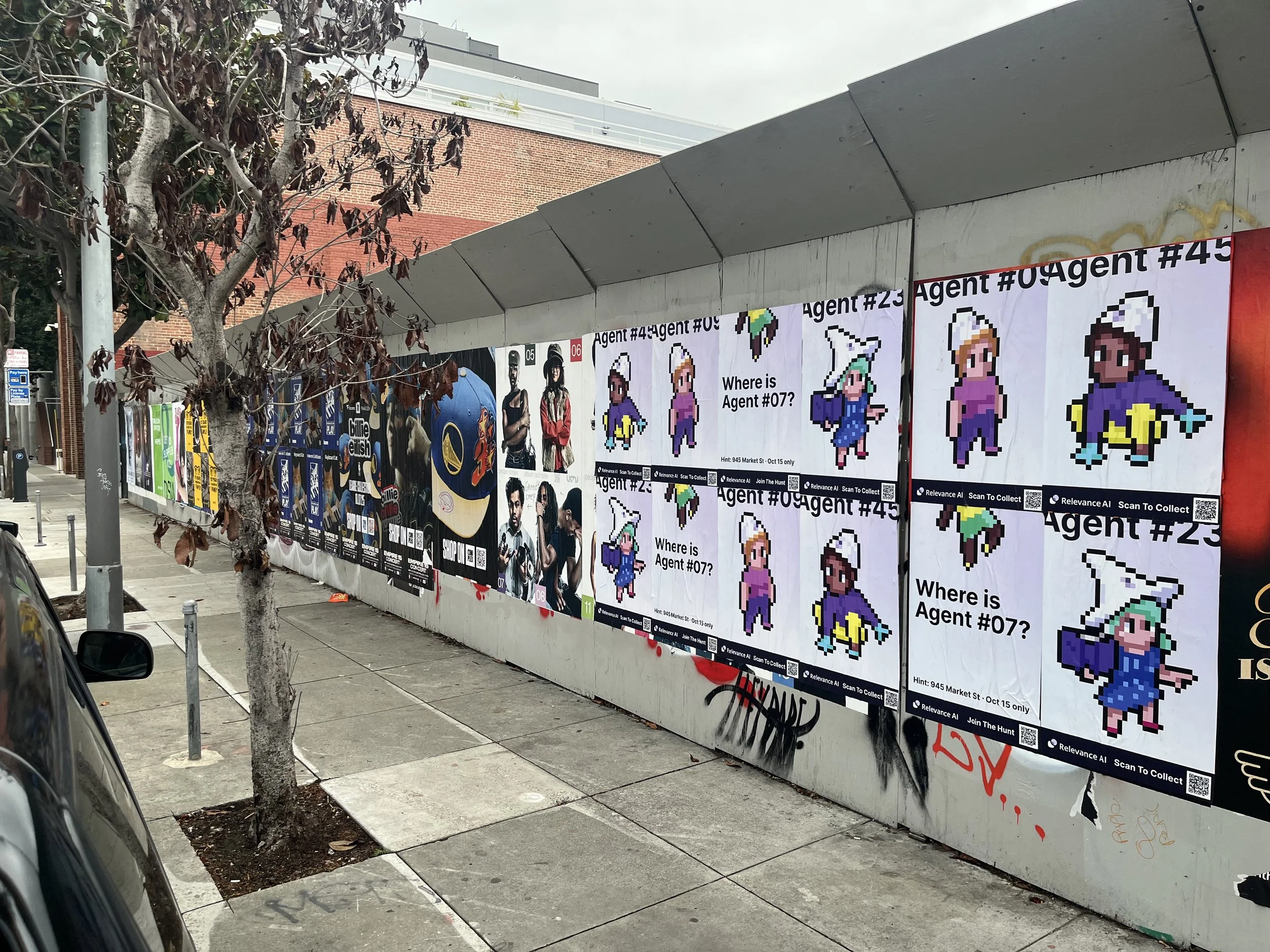
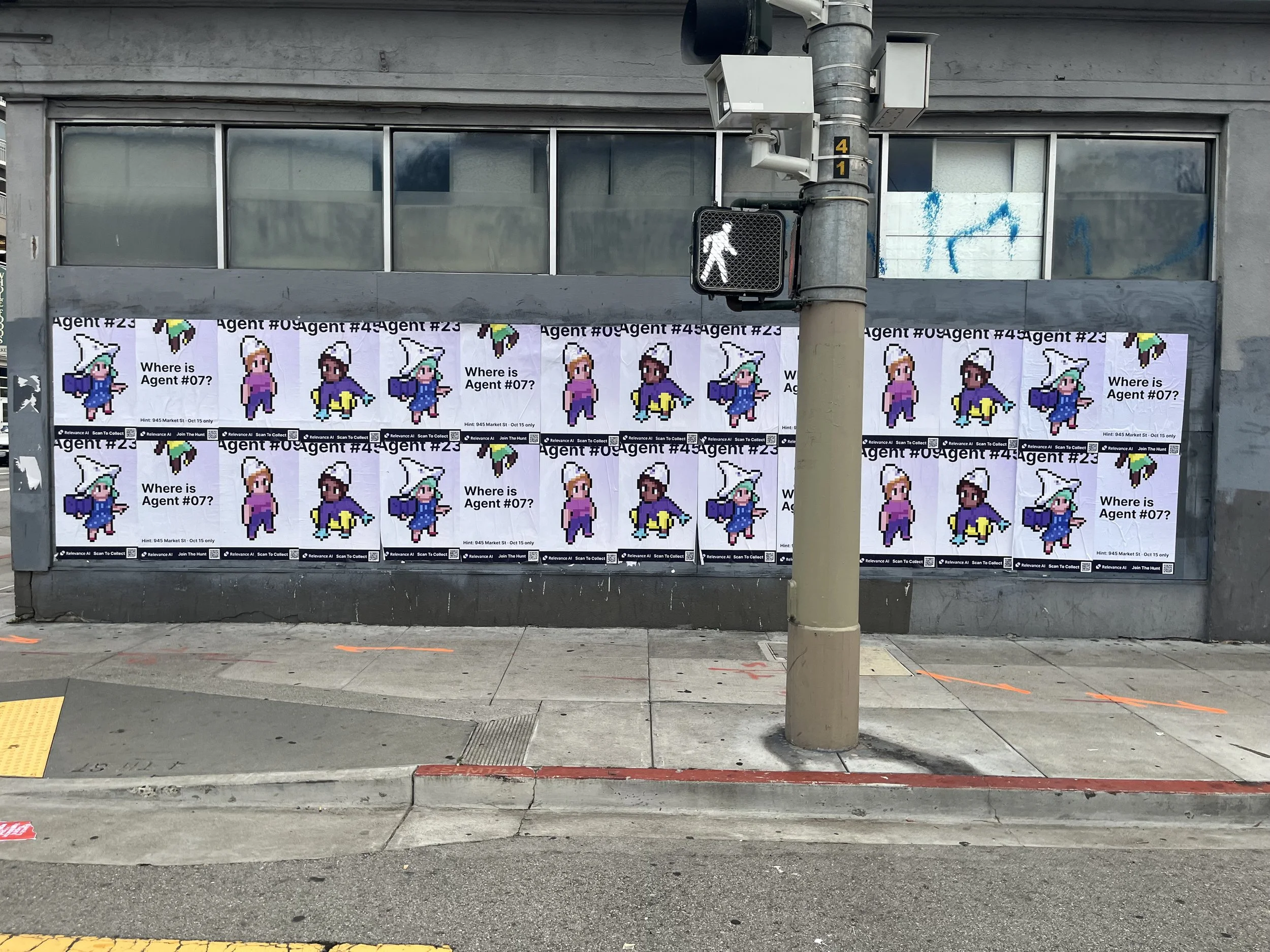
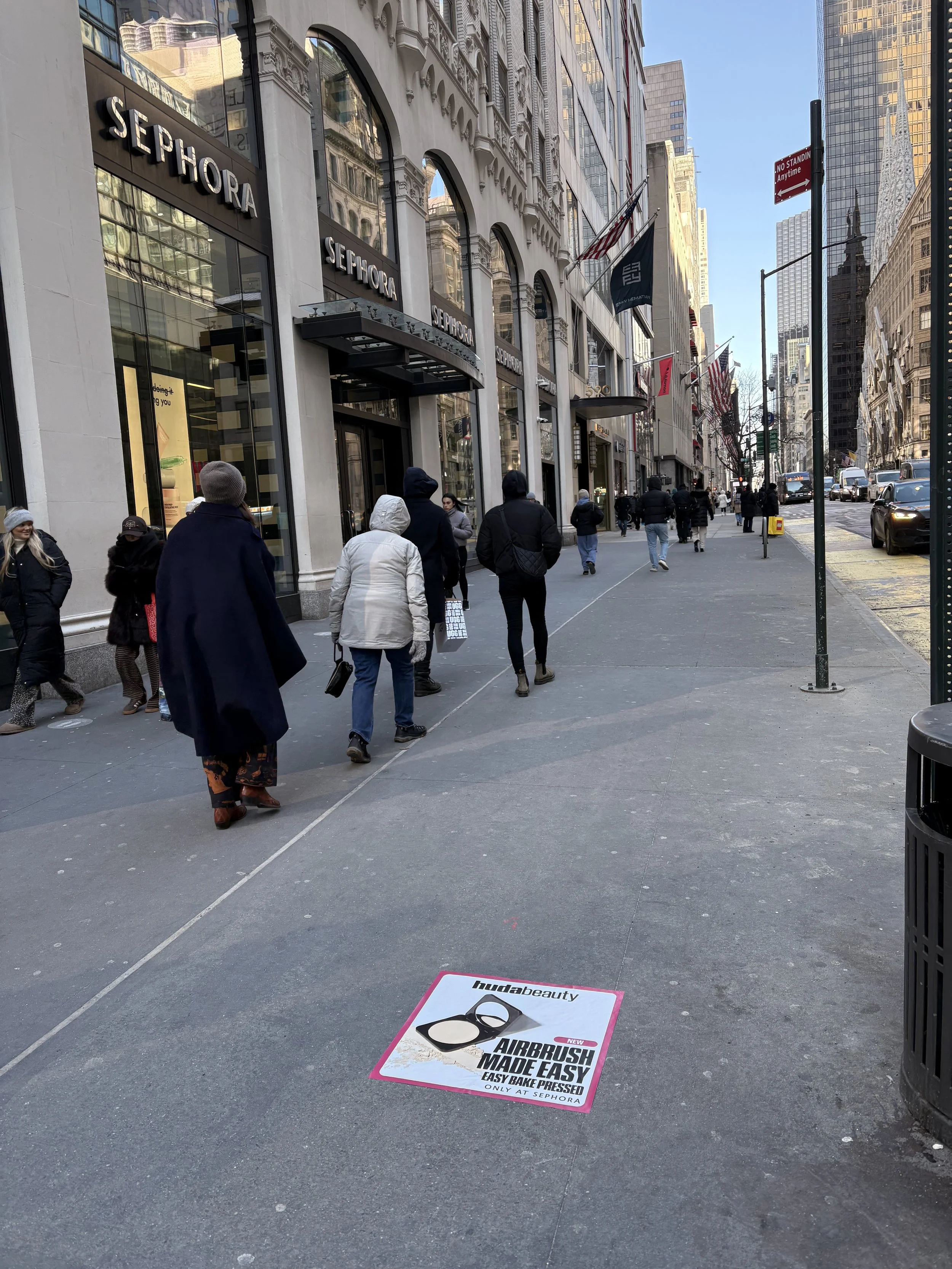
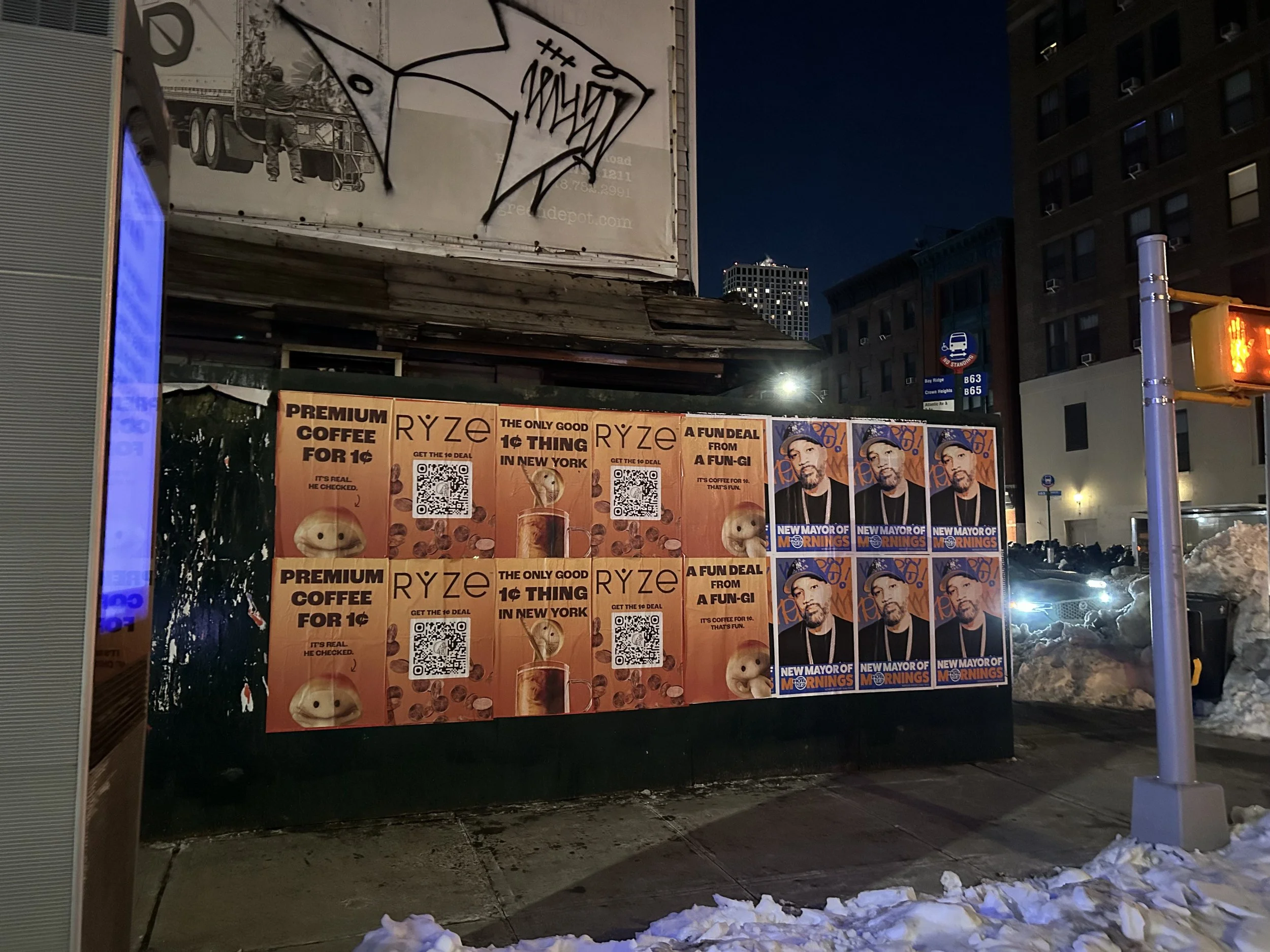
Vancouver combines stunning urban landscapes with active pedestrian neighborhoods and a thriving creative industry. Guerrilla marketing campaigns placed in areas such as Gastown, Mount Pleasant, and Downtown Vancouver can generate strong visibility among residents and visitors. Wheat pasting and sidewalk advertising campaigns provide brands with powerful ways to stand out within this dynamic West Coast city.
High Impact Guerrilla Marketing in Vancouver Canada
our services
-
![what pasting campaign by sidewalk activations]()
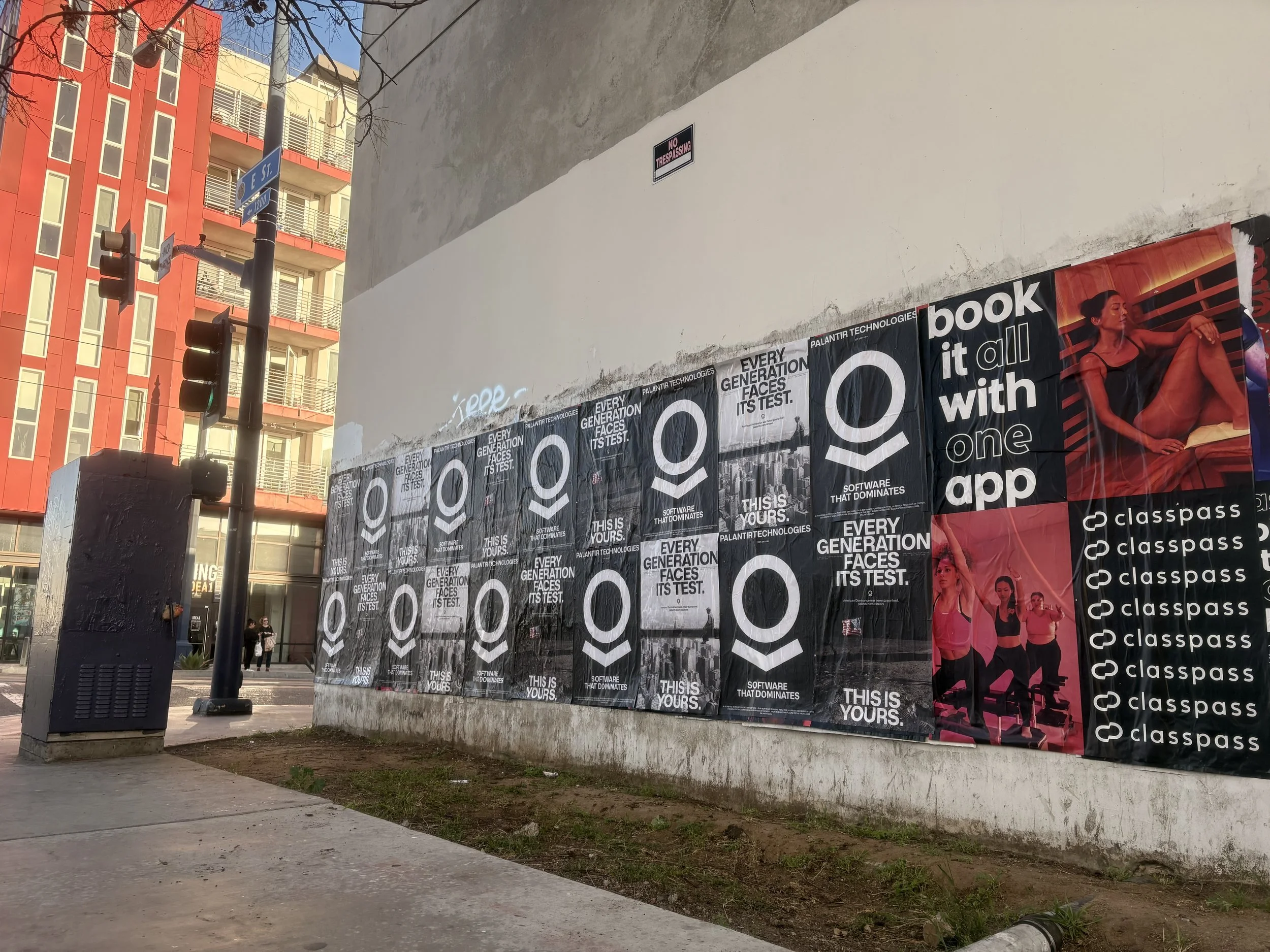
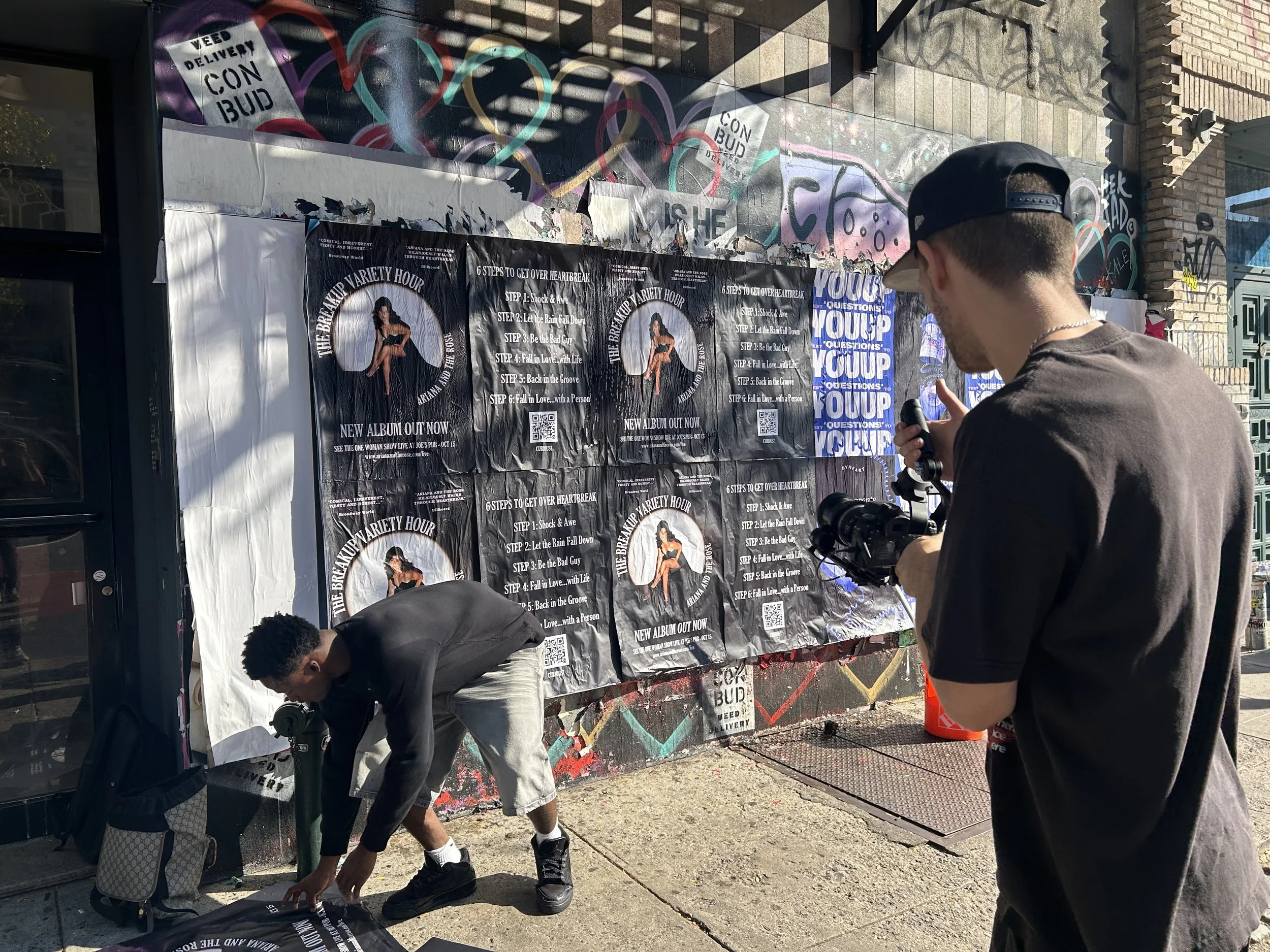
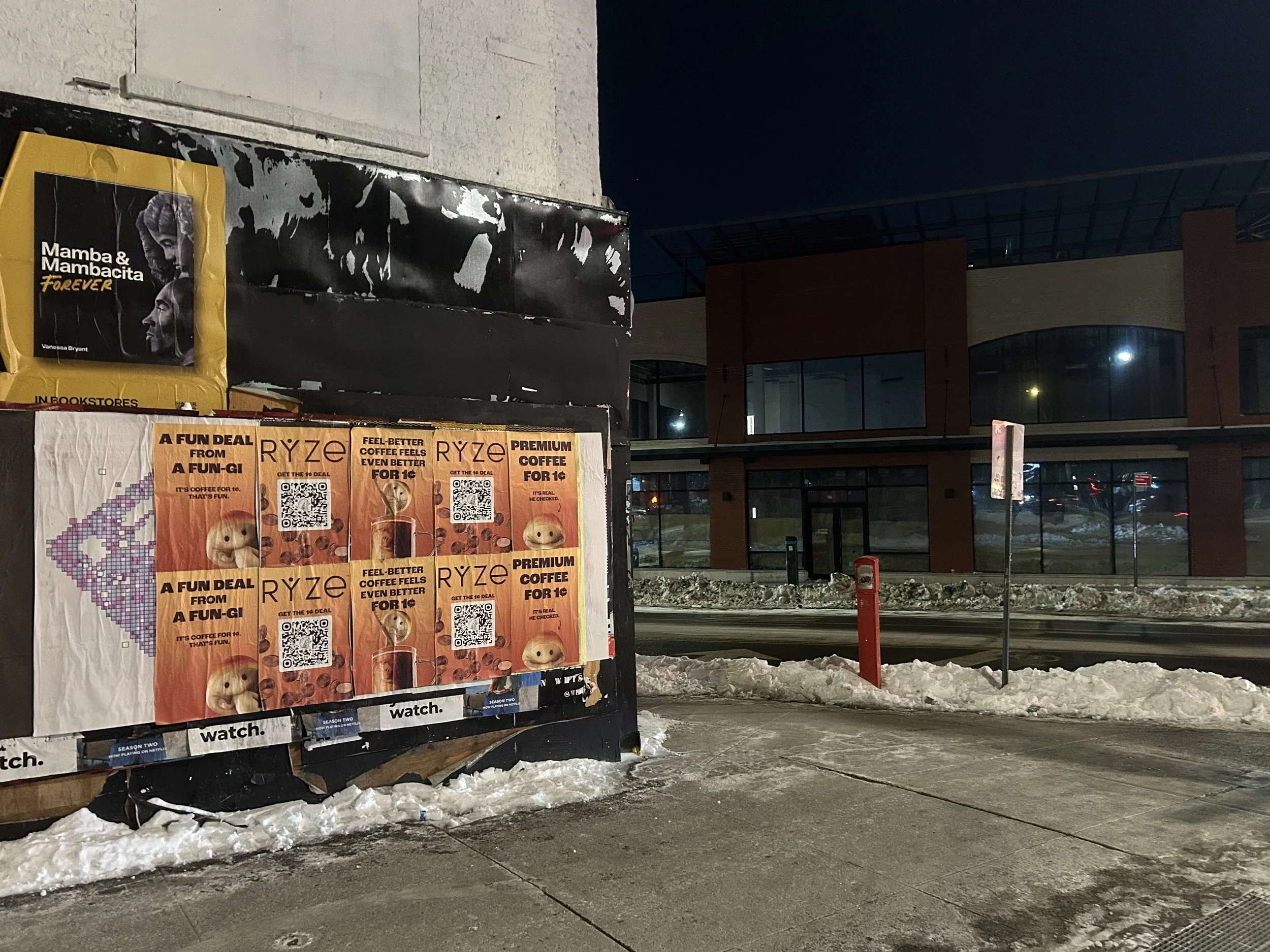
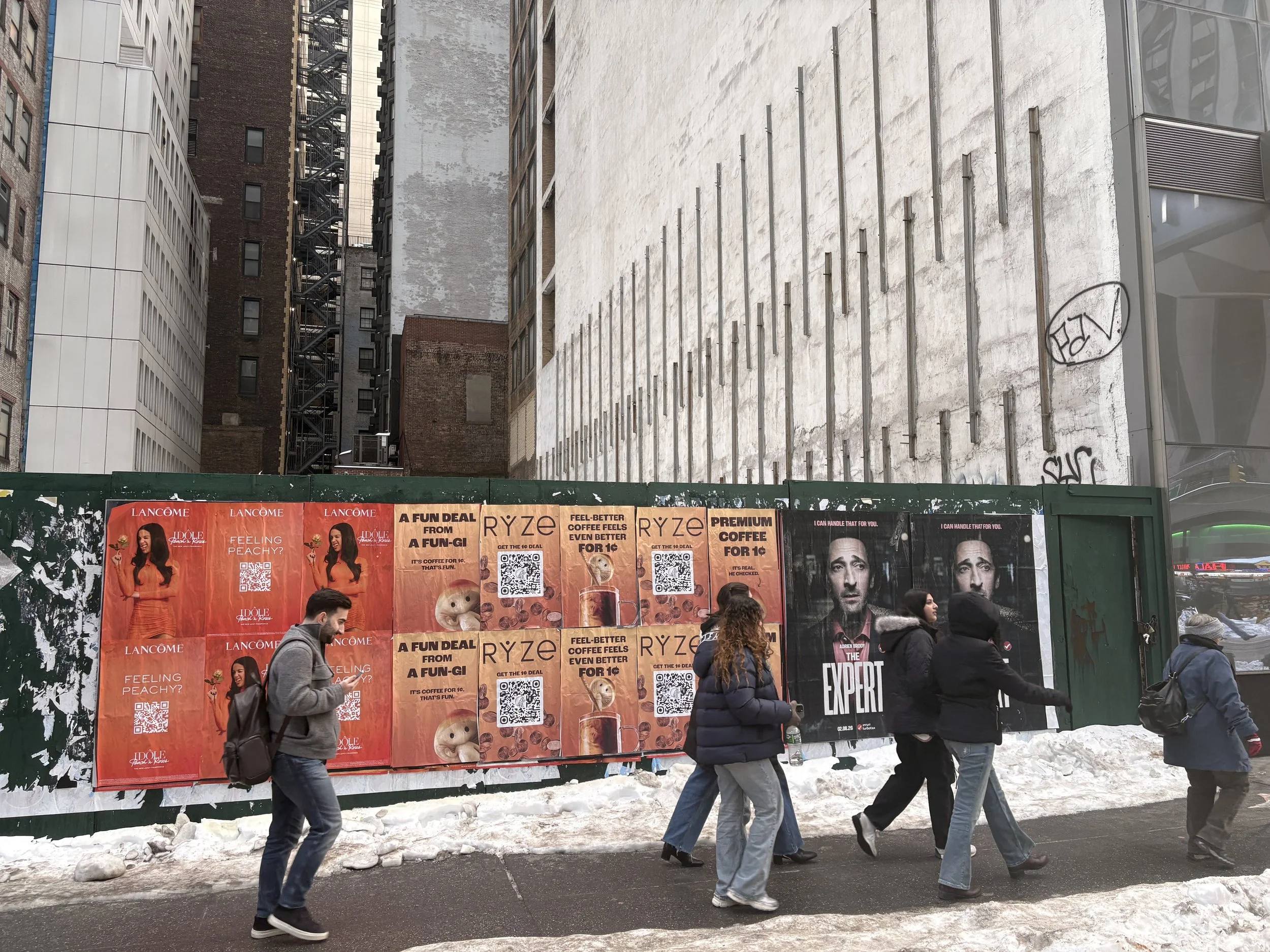
wheat paste posters
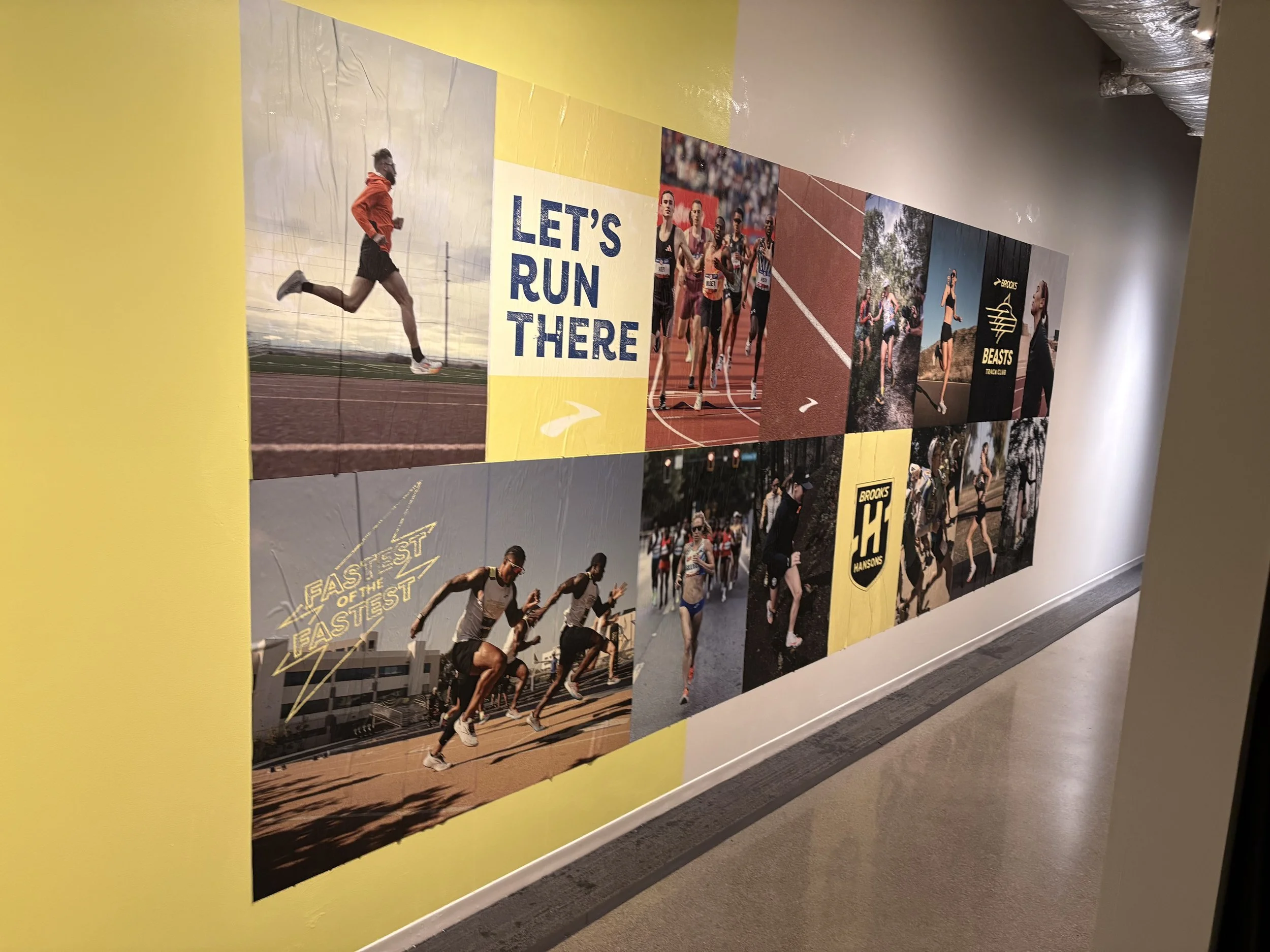
Large-format paper posters adhered to walls. Wheat pasting turns building facades into bold brand canvases.
-
![Sidewalk decal/graphic in times square]()
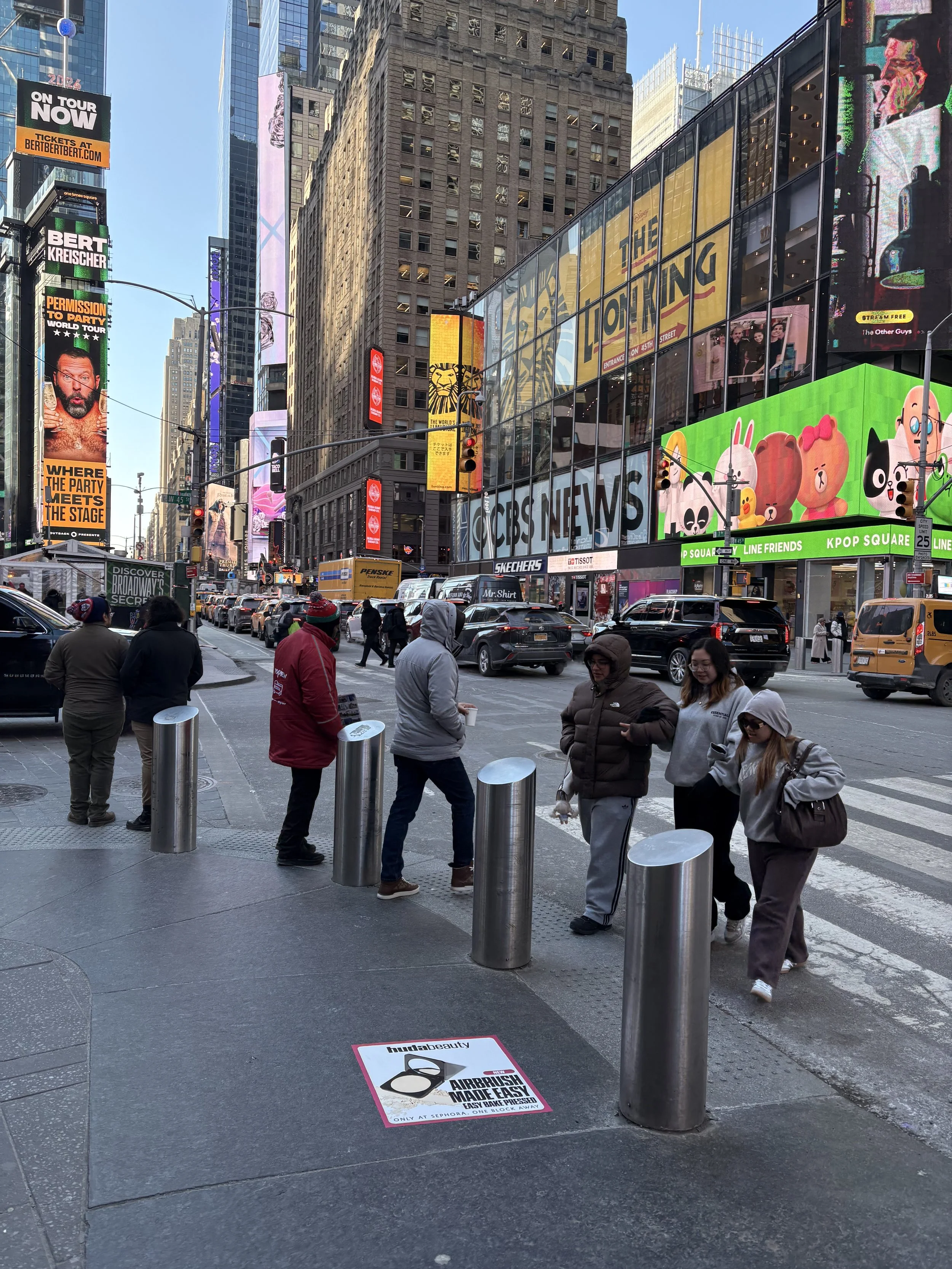
SIDEWALK DECALS
Decal advertising uses custom floor stickers applied directly to sidewalks and indoor surfaces, creating durable, high-impact brand touchpoints that withstand foot traffic and demand attention.
-
![sidewalk stencil in san francisco]()
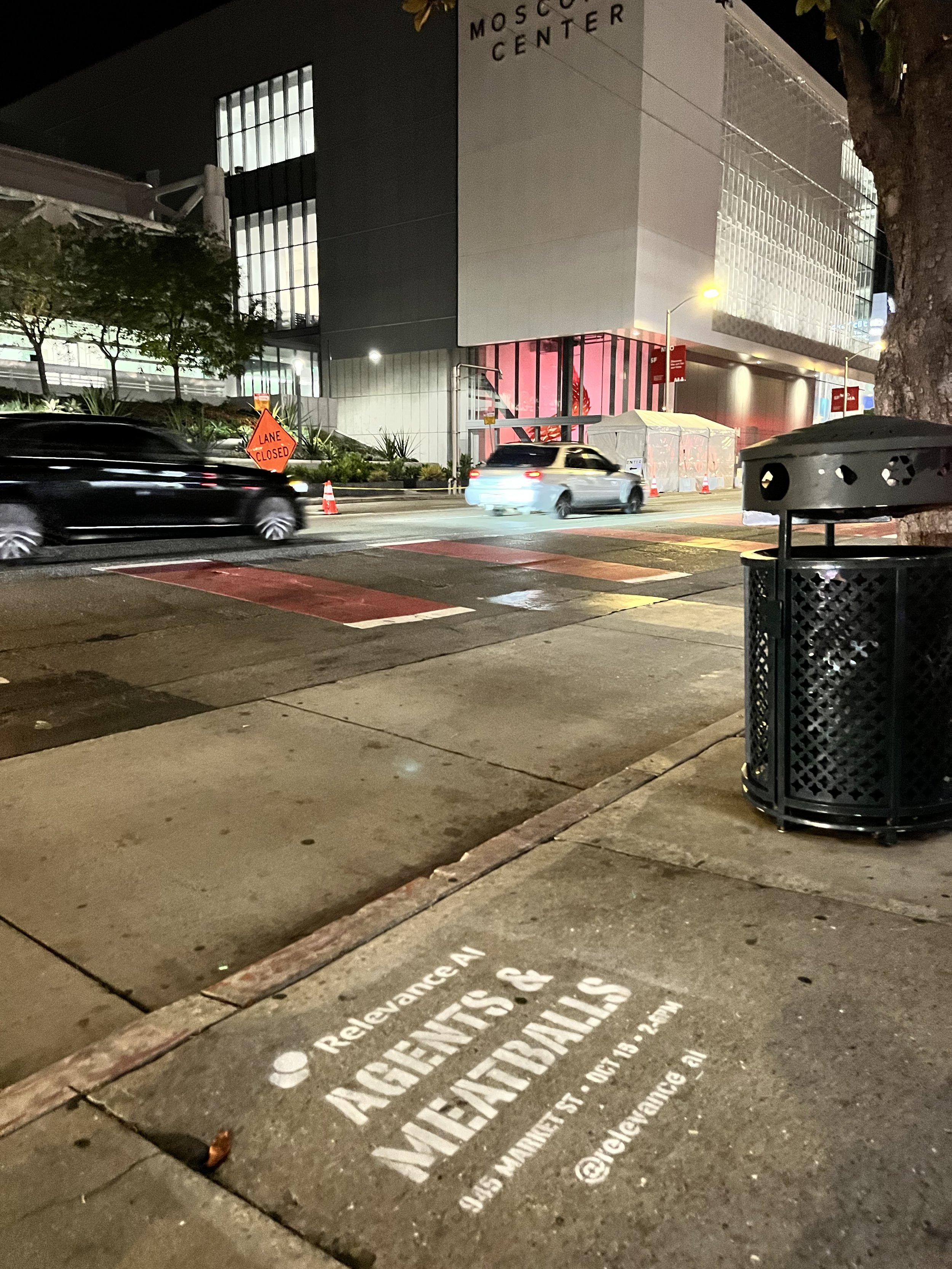
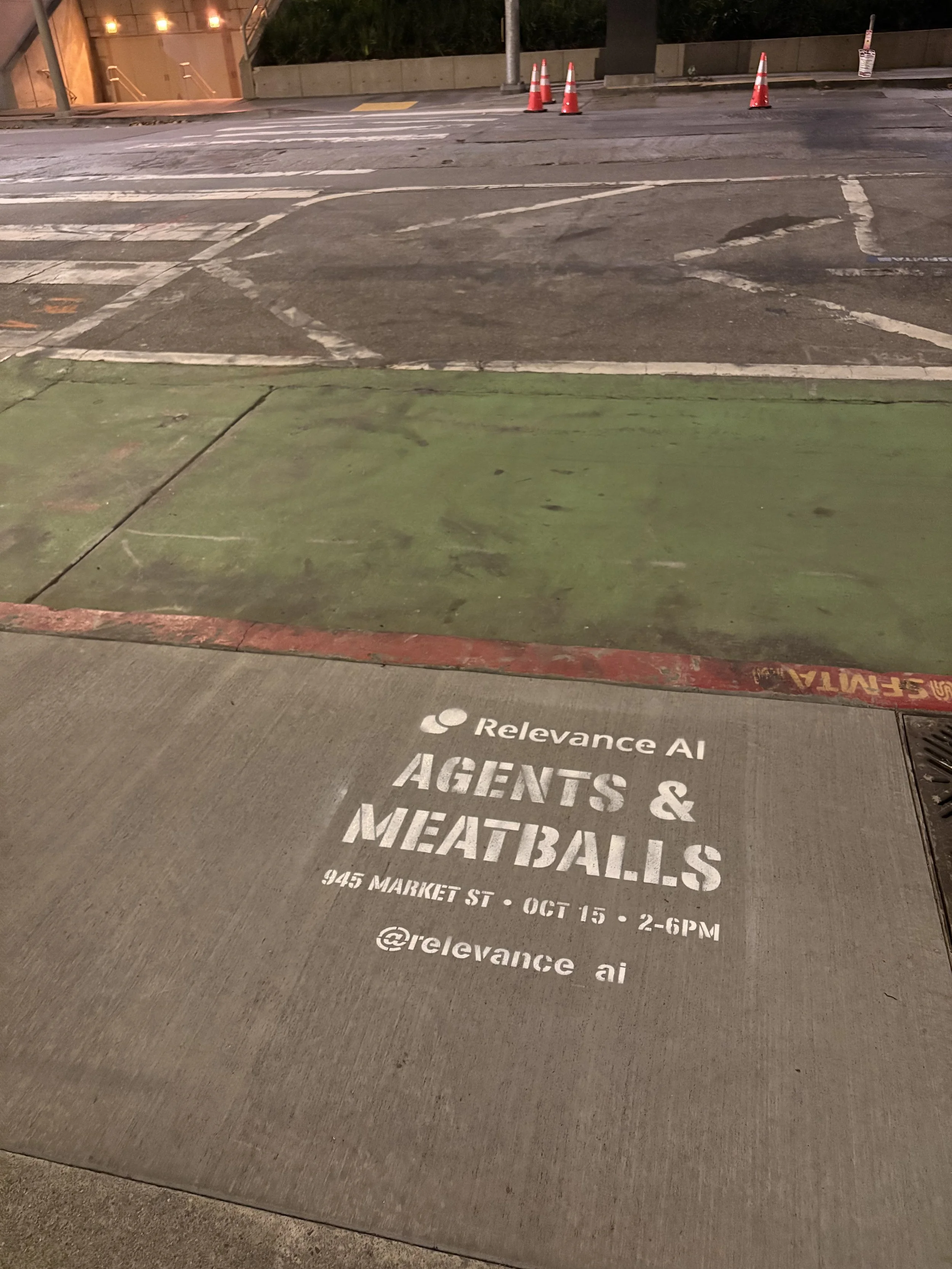
SIDEWALK STENCils
Custom-cut designs spray-painted onto sidewalks. Stencils create high-visibility messages that guide foot traffic and reinforce branding at street level.
-
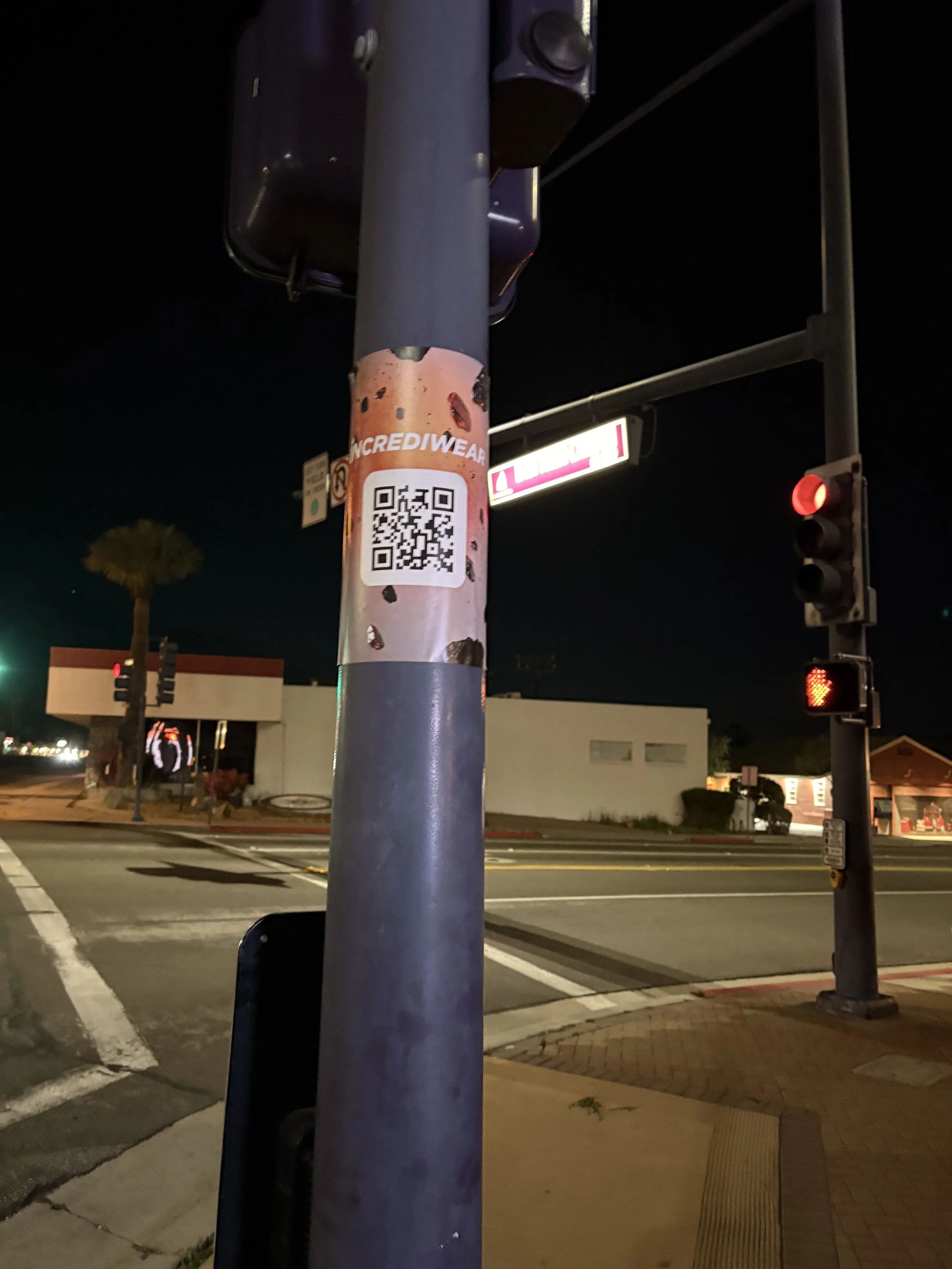
![Snipe advertisement by sidewalk activations]()
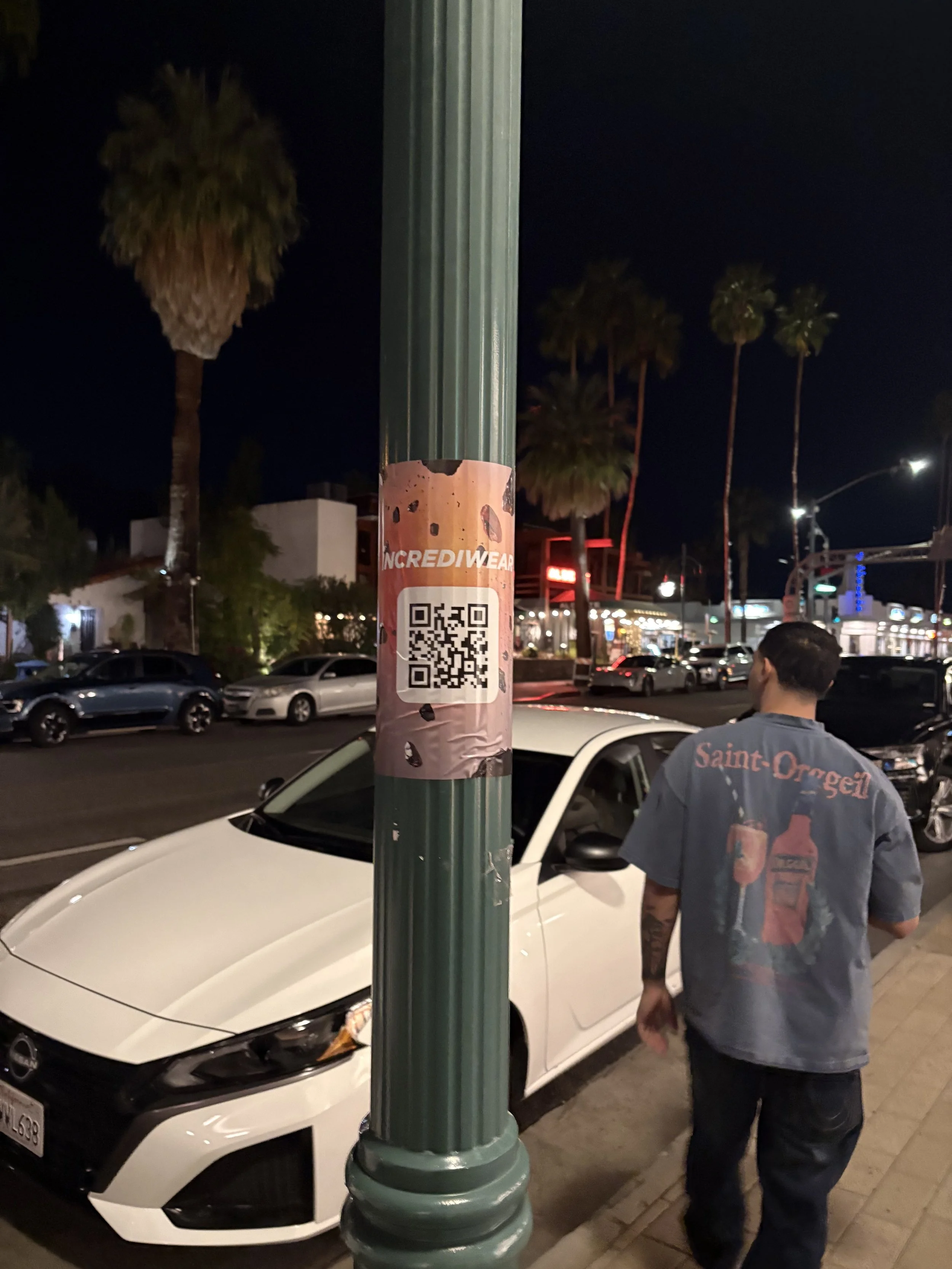
Snipe Ads
Snipe advertising places small 8.5" x 11" posters on poles, street lamps, and sign posts, capturing eye-level attention and building frequency throughout high-traffic corridors.
-
![wheat paste poster installation inside office]()
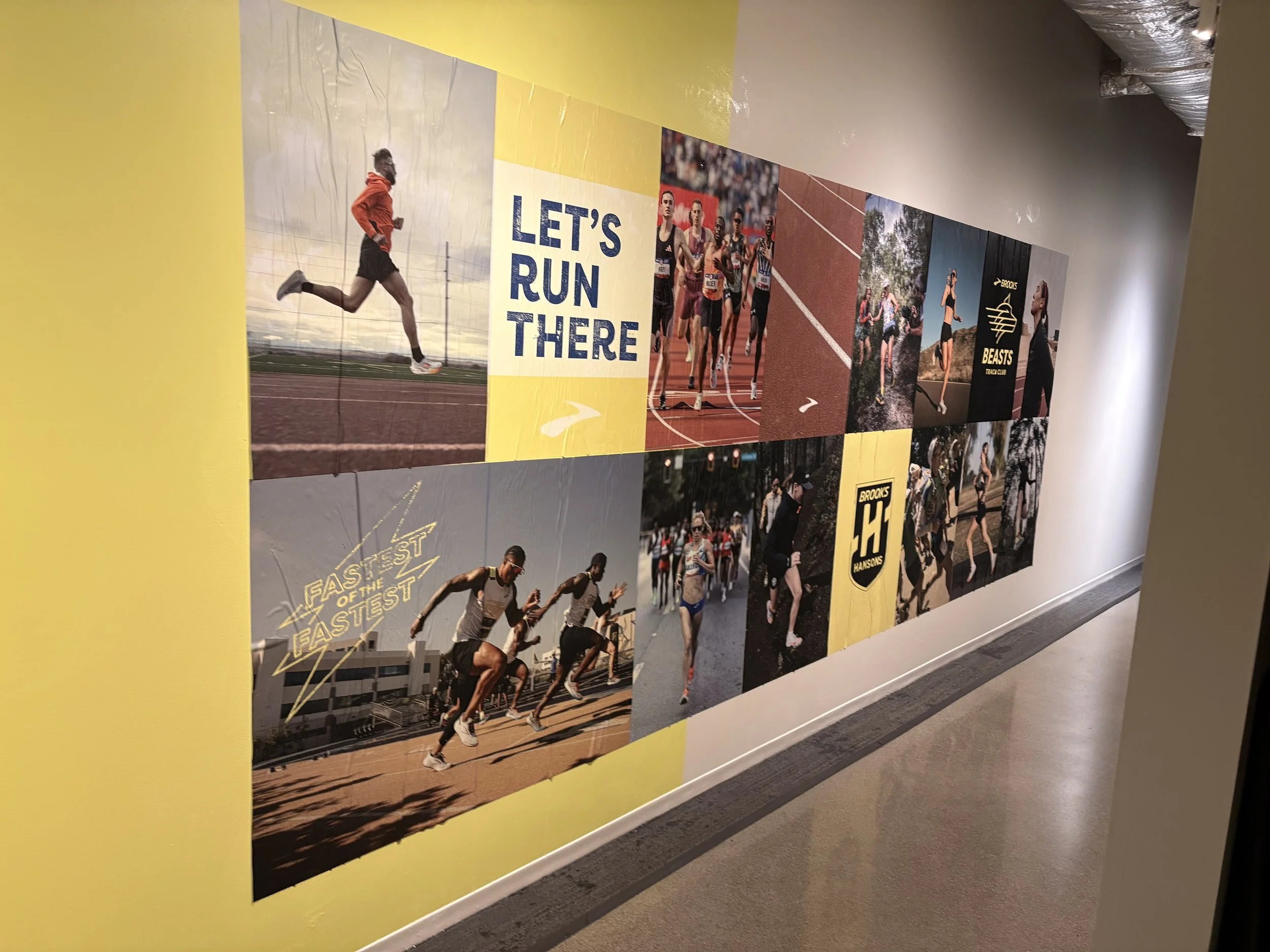
indoor wheat paste poster installs
indoor installation inside office space
contact us
Guerrilla Marketing in Vancouver Canada
Vancouver presents a landscape of extraordinary natural beauty and urban complexity, a city officially divided into 22 distinct neighbourhoods spread across a peninsula surrounded by the Pacific Ocean, Burrard Inlet, and the Fraser River, with the towering North Shore mountains as a dramatic backdrop . For a guerrilla agency like Sidewalk Activation, success here depends on understanding that Vancouver is not a monolith but a federation of fiercely independent communities, from the historic cobblestones of Gastown to the trendy boutiques of Yaletown, from the beaches of Kitsilano to the multicultural markets of the Sunset neighbourhood. The city's identity as a world-class destination for both tourism and film production—earning it the nickname "Hollywood North"—is woven into every neighbourhood's character. Vancouver welcomed a record-breaking surge of visitors in 2025, with hotel occupancy reaching 83.3% in May at an average daily rate of $306, the highest in Canada . The city is now preparing for its most significant international moment since the 2010 Olympics: hosting seven matches of the 2026 FIFA World Cup at BC Place, with an estimated 750,000 visitors expected across the tournament . The guerrilla marketer in Vancouver must become fluent in the language of the city's neighbourhoods, a navigator of its newly adopted Public Realm Advertising Framework, and a respectful participant in communities shaped by Indigenous heritage, Asian immigration waves, and a fiercely local spirit.
The Downtown peninsula forms Vancouver's urban core, containing multiple distinct districts within its compact area. The Central Business District houses offices and popular entertainment venues alongside high-rise residential towers . The West End, nestled between Stanley Park and English Bay, is one of the city's densest residential neighbourhoods, with tree-lined streets of heritage apartments giving way to the beaches and seawall that draw residents and visitors alike . Yaletown, a former warehouse district, has been completely revitalized with commercial and residential developments housed in heritage brick buildings, attracting an upper-middle-class demographic to its converted lofts and sidewalk cafés . Coal Harbour, the city's former port area along Burrard Inlet, has transformed into a premium high-rise neighbourhood home to high-income residents with spectacular waterfront views . The seawall, a nearly 30-kilometre path, connects these districts and provides a continuous pedestrian corridor used by thousands daily for commuting, recreation, and tourism .
The heritage districts east of downtown offer a completely different texture, where Vancouver's founding history is embedded in the streets. Gastown, the city's original settlement, features cobblestone streets, the famous steam clock, and a mix of tourist shops alongside low and middle-class residents living in apartments, condos, and lofts . The area balances heritage preservation with contemporary retail and nightlife. Chinatown, another heritage area where many Chinese immigrants first established their homes and businesses, contains the second largest Chinatown in North America after San Francisco . Residential areas here are home to low-income residents in apartments, with some warehouses still operating in the area . Crosstown, a roughly four-block area, connects Chinatown, Gastown, and Yaletown, with landmarks including the historic Sun Tower and heritage high-rise boutique loft conversions . The Downtown Eastside, one of the city's oldest neighbourhoods, faces complex social challenges including homelessness and drug use, requiring any engagement to be handled with profound sensitivity and community partnership .
South of False Creek, the Fairview neighbourhood contains popular attractions including Granville Island, a former industrial area transformed into a vibrant public market with artisan shops, theatres, and restaurants under the Granville Street Bridge. The neighbourhood is also home to Vancouver General Hospital and many health-related institutions . Mount Pleasant, straddling the slope between Fairview and the rest of East Vancouver, is known for its unusual stores, heritage buildings, artistic residents, and arts-focused festivals . Main Street has become an increasingly popular dining and shopping destination. Kensington-Cedar Cottage, one of the most multicultural neighbourhoods in the city, is located in the middle of East Vancouver and contains Trout Lake, a popular recreation spot, and Little Saigon, a hub for Vancouver's Vietnamese-Canadian community .
The west side neighbourhoods represent Vancouver's more affluent residential character. Kitsilano, located along the south end of English Bay, is famous for its popular beaches, including Kitsilano Beach with its outdoor pool, and attracts a demographic often described as "new age" or health-conscious . Point Grey, adjacent to Kitsilano, houses the University of British Columbia and some of the city's most expensive properties . Kerrisdale is a primarily residential neighbourhood bisected by the Arbutus Greenway and containing the Kerrisdale Village shopping area . Shaughnessy is an affluent and mostly residential area containing large detached homes, many from the first half of the 20th century, with heritage protections preserving its character . Dunbar-Southlands, an affluent neighbourhood on the western side of the city, primarily contains single-family dwellings and also contains the Musqueam Indian Band Reserve #2, recognizing the area's Indigenous heritage .
East Vancouver encompasses neighbourhoods with diverse working-class and multicultural character. Strathcona, one of the city's oldest neighbourhoods, has historically been home to Vancouver's British, Irish, Russian, Croatian, Greek, Scandinavian, Japanese, and Chinese populations, reflecting waves of immigration over more than a century . Grandview-Woodland is a mature neighbourhood that is a diverse mixture of commercial, industrial, single-family, and multi-family residential dwellings with a rich ethnic history. Commercial Drive, running through this area, is considered the bohemian heart of the city, lined with cafes, restaurants, and independent shops reflecting its Italian heritage and subsequent waves of immigration . Hastings-Sunrise, one of Vancouver's oldest neighbourhoods, is mainly residential with a dense strip of shops along Hastings Street and is home to Hastings Park and the Pacific National Exhibition .
The southeast quadrant contains some of Vancouver's most culturally vibrant communities. Sunset is an ethnically diverse, working-class neighbourhood filled with single-family homes, low-rise apartments, and small retail shops. It is home to Little India (Punjabi Market), the centre of Vancouver's Indo-Canadian population . Victoria-Fraserview is a multiculturally diverse neighbourhood with a large Chinese-Canadian population, containing a mixture of retail and residential development . Killarney, in the southeastern corner of the city, mostly contains single-family residences with some multi-family homes as well as townhouses and high-rises in the recent Fraserlands development along the river . Marpole, near the Fraser River, contains a diverse range of low-density to high-density residential and multiple commercial streets and was once the site of a Musqueam village .
The University of British Columbia, located on Point Grey, functions almost as its own community with student housing, academic buildings, and the surrounding endowment lands with trails and beaches . The North Shore, across Burrard Inlet, includes the District of West Vancouver, City of North Vancouver, and District of North Vancouver, with mountain access, hiking trails, and ski resorts . Burnaby, Richmond, Surrey, and other suburbs complete the Greater Vancouver metropolitan area of more than 2 million residents .
Vancouver's tourism economy reached extraordinary heights in 2025, with the city establishing itself as Canada's premium destination. Hotel occupancy hit 83.3% in May, accompanied by an average daily rate of $306—the highest in the country . This performance reflects Vancouver's ability to attract global visitors willing to pay top prices for the city's combination of natural beauty, ocean access, and mountain views. The cruise industry has rebounded strongly, with Vancouver serving as a major homeport for Alaska voyages, creating steady visitor influx during spring and summer that pushes hotels close to full capacity . Domestic Canadian travellers have driven much of the growth, choosing to stay close to home amid political tensions and economic uncertainties with the United States, making Vancouver one of Canada's most popular vacation destinations . U.S. visitors remain a crucial segment, accounting for 24% of all international visits and 28% of total tourism spending, though concerns persist that rising hotel costs may drive American tourists to alternatives like Seattle, which has a thriving hotel market and has launched "Open Arms for Canada" campaigns offering steep discounts to Canadian travellers .
The 2026 FIFA World Cup represents an unprecedented opportunity for Vancouver, with seven matches scheduled at BC Place Stadium starting June 13, 2026 . An estimated 750,000 visitors are expected across the tournament, with preparations well underway. BC Place is undergoing a $196-million upgrade including new elevators, upgraded locker rooms and lighting, revamped hospitality areas, and installation of temporary grass beginning April 26 . A free fan festival at the brand-new PNE Amphitheatre will feature live broadcasts of games, food, and various activities . The B.C. government has pegged the total cost for hosting at between $532 million and $624 million . As the 100-day countdown approaches, billboards proclaiming World Cup messaging have appeared across the city, and tournament signage is becoming increasingly visible . Organizers are working closely with residents and businesses near BC Place to communicate expectations during the event .
The regulatory environment for outdoor activation in Vancouver has recently undergone significant transformation. In September 2025, City Council unanimously approved the new Public Realm Advertising Framework, establishing the first overarching strategy for where and how public realm advertising—including billboards, bus shelter ads, and digital panels—should be permitted . Until this framework, the City had no coordinated approach, resulting in inconsistent decision-making, foregone revenues, and uneven impacts on residential neighbourhoods and business districts . The framework sets six guiding principles, including that advertising impacts the public realm, those impacts should be offset by community or financial benefits, and that City Council—not developers or advertisers—should decide the balance between revenue potential and neighbourhood character .
Advertising rules differ by scenario. For streets right-of-way, the City already generates significant revenue from its street furniture contract, including bus shelters with digital panels projected to bring in $6.6 million in 2025, with each digital panel in downtown Vancouver generating up to $230,000 per year . On City-owned lands, there are currently 36 billboard faces generating about $261,000 annually, an average of just $7,250 per billboard . On private lands, more than 700 static billboards exist, many grandfathered in before 2017 regulations, contributing little financial value to the City . Digital advertising screens can generate up to eight times more revenue than static billboards, and advertisers are pushing to expand their use . The definition of an outdoor advertising structure in Vancouver's municipal code dates to 1930, broadly covering any structure erected for posting advertisements, but exempting signs for businesses on the premises and real estate signs .
As an immediate action following the framework's adoption, City staff will begin procurement to gauge market demand for digital advertising screens on City street rights of way . Other advertising opportunities, such as on City buildings or park lands, will be considered case-by-case. The City has already approved a giant digital advertising screen on the rooftop of a building at Granville and Smithe Streets in exchange for an enhanced public benefits package including community airtime and annual direct financial payments .
Vancouver's tourism infrastructure faces significant pressure amid the boom. Hotel room inventory has remained relatively stable since 2002, creating a supply-demand imbalance as visitor numbers surge . Hotels were already over 80% full in July 2025, with this figure rising steadily . Car rentals and other tourism services are also strained by unprecedented demand . City officials acknowledge the need to increase hotel capacity but note that development is slow and demand significantly outstrips supply . This pressure, combined with rising prices, threatens Vancouver's accessibility as a destination and may drive visitors to competing cities like Seattle, which has capitalized on the situation with targeted marketing campaigns .
The city's multicultural character adds richness to any marketing effort. Vancouver is one of the most ethnically diverse metropolitan areas in the world, with large Chinese, South Asian, Filipino, Vietnamese, and other communities shaping neighbourhoods and cultural life . Sunset's Punjabi Market, Kensington-Cedar Cottage's Little Saigon, Renfrew-Collingwood's Filipino businesses around Joyce-Collingwood SkyTrain Station, and Oakridge's Jewish community all reflect this diversity . The city's Indigenous heritage is recognized through neighbourhoods like Marpole, once the site of a Musqueam village, and the Musqueam Indian Band Reserve in Dunbar-Southlands .
Throughout this dynamic landscape, Sidewalk Activation brings deep local knowledge, regulatory expertise, and authentic community relationships to every Vancouver campaign. We understand that Vancouver is a city of 22 official neighbourhoods and countless unofficial districts, from the heritage charm of Gastown to the bohemian energy of Commercial Drive, from the affluent streets of Shaughnessy to the multicultural markets of Sunset. We know that the city's new Public Realm Advertising Framework opens opportunities while requiring careful compliance with borough-specific regulations and community sensibilities. We track the tourism data showing record occupancy and rates, the cruise industry's robust recovery, and the domestic travel boom driving demand . We monitor World Cup preparations intensively, designing campaigns that will activate throughout the city during this once-in-a-generation global event, from the new PNE Amphitheatre fan fest to neighbourhoods near BC Place . In a city of stunning natural beauty, record visitor numbers, and a regulatory framework newly designed to balance revenue with character, the brands that win are those that show up with respect, authenticity, and genuine commitment to the communities they seek to engage.
For more information, please contact us at info@sidewalkactivations.com.
SIDEWALK activation packages
At Sidewalk Activations, we specialize in four of the most impactful forms of street-level marketing: wheat pasting posters, sidewalk stencils, custom decals, and snipe advertising. Each format delivers bold visibility where it matters most—on the streets, in front of real people, in the middle of their daily routines. We don't just create ads—we create moments of discovery that spark curiosity, engagement, and conversation.
Sidewalk stencils are one of our signature tools. With custom-cut designs ranging from 6" x 60" up to 48" x 48", our stencils are built to stand out in high-traffic areas. Placed directly onto sidewalks and pavements with eco-friendly, temporary marking paint, these visuals are impossible to miss. They guide foot traffic, reinforce branding, and create a breadcrumb trail effect that leads people straight to your event, pop-up, or storefront.
Wheat pasting, on the other hand, gives brands a canvas that's larger-than-life. Our posters range from 24" x 36" to 48" x 72", transforming city walls into storyboards for your brand. From single-block takeovers to massive citywide campaigns, our wheat pasting is precise, creative, and always positioned in the neighborhoods that matter most for your audience.
Custom sidewalk decals offer a durable, high-impact alternative that sticks directly to pavement and interior floors. Available in sizes like 24" x 24", 17-inch circles, or fully custom shapes, our decals are built to withstand foot traffic while delivering crisp, vibrant branding. Perfect for guiding customers, reinforcing messages, or creating interactive floor experiences.
Snipe advertising adds the final layer to our street-level toolkit. These 8.5" x 11" posters are hand-placed on poles, street lamps, and sign posts—capturing attention at eye level in the moments between destinations. Small but mighty, snipes create frequency and reinforce your message throughout high-traffic corridors.
What makes Sidewalk Activations unique is how we combine these four formats into fully integrated campaigns. By weaving together wheat paste visuals, strategic stencil placements, durable decals, and snipe frequency, we ensure your brand connects with people from every angle—above eye level, at eye level, and beneath their feet. Each campaign is mapped, documented, and executed with attention to detail that guarantees your message not only lands but resonates.
WHEAT PASTING PACKAGE
Bring your brand to the streets with bold, large-format posters that dominate city walls and high-traffic neighborhoods. Our wheat pasting campaigns are fully mapped and strategically executed to maximize visibility where your audience lives, works, and plays. With poster sizes ranging from standard 24" x 36" to jumbo 48" x 72", we create campaigns that leave a lasting impression.
Each package includes:
Professional design consultation
Strategic placement in key locations
Full documentation of all poster hits
Options for single-block takeovers or citywide activations
SIDEWALK STENCILS PACKAGE
Put your message right where people walk. Our sidewalk stencils range in size from 6" x 60" up to 48" x 48", applied using eco-friendly, temporary paint in prime foot-traffic zones like shopping districts, event areas, subway exits, and nightlife hubs. With precise mapping and professional execution, stencils create a breadcrumb trail effect that guides pedestrians directly to your brand.
Each package includes:
Custom stencil design + production
Strategic deployment across 25–200+ hits depending on campaign scale
Eco-friendly paint applications
Documentation of all placements
CUSTOM DECALS PACKAGE
Make your mark stick with durable, high-impact custom decals. Available in 24" x 24", 17-inch circles, or fully custom shapes, our decals are designed to withstand heavy foot traffic while maintaining vibrant, crisp branding. Perfect for retail floors, indoor activations, sidewalk placements, and event spaces.
Each package includes:
Custom decal design + production
Durable, slip-resistant materials
Strategic placement in high-traffic zones
Full documentation of all installations
SNIPE ADVERTISING PACKAGE
Own the poles, street lamps, and sign posts. Our 8.5" x 11" snipe posters are hand-placed at eye level throughout high-traffic corridors, creating frequency and reinforcing your message in the moments between destinations. Small format, big impact.
Each package includes:
Custom snipe design + printing
Strategic placement on poles, street lamps, and sign posts
25–500+ placements depending on campaign scale
Full documentation of all hits
FULL IMPACT PACKAGE (WHEAT PASTING + STENCILS + DECALS + SNIPES)
For brands that want to completely own the streets, our combined package leverages the power of all four formats. Large-format posters dominate the visual landscape. Stencils reinforce the message at ground level. Decals create durable, lasting touchpoints. Snipes add frequency at eye level. Together, they create a multi-layered, high-impact experience that's impossible to ignore. Perfect for pop-ups, product launches, and nationwide rollouts.
Each package includes:
Complete wheat pasting campaign (24" x 36" up to 48" x 72")
Sidewalk stencil activations (25–200+ placements)
Custom decal installations (various sizes)
Snipe advertising placements (25–500+ hits)
Strategic mapping and placement for maximum visibility
Full campaign documentation + photos for reporting
Nationwide and international deployment
Contact us at info@sidewalkactivations.com to start your campaign today.
Frequently Asked questions Vancouver Canada
Vancouver is officially divided into 22 distinct neighbourhoods, from the West End's beaches to the multicultural markets of Sunset . How does that diversity shape your guerrilla marketing approach?
Vancouver's identity is woven into its neighbourhoods, each with its own character, demographics, and community rhythm. Kitsilano's beach culture and health-conscious residents demand a different approach than the heritage cobblestones of Gastown or the working-class authenticity of Commercial Drive . At Sidewalk Activation, we treat each of the city's 22 official neighbourhoods as its own micro-market with a unique cultural fingerprint. The affluent, residential character of Shaughnessy, with its heritage mansions and tree-lined streets, requires completely different engagement than the bustling commercial corridors of Mount Pleasant with its artistic festivals and unusual stores . Our guerrilla strategy is about matching the neighbourhood's rhythm, whether that means activating along the seawall in Coal Harbour or creating experiences in Little India during cultural celebrations. For more information, please contact us at info@sidewalkactivations.com.
Vancouver achieved record-breaking hotel occupancy of 83.3% in May 2025 with an average daily rate of $306, the highest in Canada . How do you leverage this tourism surge for guerrilla campaigns?
Vancouver's tourism boom is remarkable, driven by both international visitors and domestic travellers choosing to stay close to home amid economic uncertainties . The cruise industry's strong recovery has pushed hotels near full capacity during spring and summer . This sustained demand creates opportunities for engagement with visitors throughout their stay. Sidewalk Activation designs campaigns that reach travellers at multiple touchpoints: before their trip through digital engagement, upon arrival at the cruise terminal and airport, and throughout their stay at the seawall, Granville Island, and neighbourhood attractions. The key is understanding that Vancouver visitors are willing to pay premium prices for authentic experiences and expect campaigns that match the city's high-end positioning . We also monitor the competitive threat from Seattle, which has aggressively marketed to Canadian travellers, and design campaigns that reinforce Vancouver's unique value . For more information, please contact us at info@sidewalkactivations.com.
The 2026 FIFA World Cup is bringing seven matches to BC Place, with 750,000 visitors expected and $196 million in stadium upgrades underway . How are you preparing for this global event?
The World Cup represents Vancouver's most significant international moment since the 2010 Olympics. BC Place renovations include new elevators, upgraded locker rooms and lighting, revamped hospitality areas, and temporary grass installation beginning April 26 . A free fan festival at the brand-new PNE Amphitheatre will feature live game broadcasts, food, and activities . The total cost to host is estimated between $532 million and $624 million . Sidewalk Activation is designing campaigns that will activate throughout the city, not just near the stadium. We're planning activations at the PNE fan fest, along transportation corridors connecting to BC Place, and in neighbourhoods where visitors will explore. We're working with residents and businesses near the stadium to ensure our campaigns complement rather than disrupt community life . The 100-day countdown has begun, with World Cup signage appearing across the city, and we're ready to help clients capture this moment . For more information, please contact us at info@sidewalkactivations.com.
In September 2025, Vancouver approved a new Public Realm Advertising Framework after decades without an overarching strategy . How do you navigate this new regulatory environment?
The new framework is a game-changer for Vancouver advertising. Until now, the City had no coordinated approach, resulting in inconsistent decisions and foregone revenues . The framework sets six guiding principles, including that advertising impacts the public realm must be offset by community or financial benefits, and City Council—not developers—should decide the balance between revenue and neighbourhood character . Rules differ by scenario: street rights-of-way already generate $6.6 million from digital bus shelters, with each downtown digital panel earning up to $230,000 annually . City-owned lands have 36 billboard faces averaging just $7,250 each . Private lands contain over 700 static billboards, many grandfathered from before 2017 regulations . Digital screens generate up to eight times more revenue than static, and advertisers are pushing to expand . City staff are now procuring market interest for new digital screens on street rights-of-way . Sidewalk Activation builds compliance into our creative process, understanding that the 1930 definition of advertising structures still governs, exempting only on-premise business signs and real estate signs . For more information, please contact us at info@sidewalkactivations.com.
Kitsilano is famous for its beaches and health-conscious culture, while Commercial Drive is known as Vancouver's bohemian heart . How do you approach such different neighbourhoods?
Kitsilano, along English Bay, attracts residents and visitors seeking beach lifestyle, outdoor recreation, and the "new age" or health-conscious vibe that has defined the area for decades . Commercial Drive, running through Grandview-Woodland, is the city's bohemian axis, lined with cafes, restaurants, and independent shops reflecting its Italian heritage and multicultural evolution . Sidewalk Activation designs completely distinct approaches for these neighbourhoods. In Kitsilano, we create activations that complement beach culture—hydration stations along the seawall, wellness experiences near Kits Pool, and partnerships with the area's many health-focused businesses. On Commercial Drive, we participate in the neighbourhood's artistic energy, partnering with independent cafes, supporting community festivals, and designing campaigns that feel like organic extensions of the Drive's eclectic character. The key is understanding that Vancouver residents take fierce pride in their neighbourhood distinctions. For more information, please contact us at info@sidewalkactivations.com.
Gastown and Yaletown are heritage districts transformed into trendy destinations, with cobblestone streets and converted warehouses . How do you respectfully engage in these sensitive historic areas?
Gastown's cobblestone streets, steam clock, and heritage buildings date to Vancouver's founding, with a mix of tourist shops and residential lofts . Yaletown's former warehouses now house high-end condos, boutiques, and sidewalk cafés, attracting an upper-middle-class demographic . These are not neighbourhoods for aggressive commercial stunts. Sidewalk Activation approaches heritage districts with respect for their architectural integrity and community character. We partner with local businesses, ensure any physical installations complement rather than compete with historic fabric, and design experiences that enhance the pedestrian experience on cobblestone streets and along converted railway corridors. The Gastown steam clock area and Yaletown's former rail tracks require particular sensitivity to the thousands of daily visitors and residents who value these neighbourhoods' authenticity . For more information, please contact us at info@sidewalkactivations.com.
Sunset neighbourhood is home to Little India (Punjabi Market), and Kensington-Cedar Cottage contains Little Saigon . How do you respectfully engage in these culturally rich communities?
Sunset is an ethnically diverse, working-class neighbourhood where Little India serves as the centre of Vancouver's Indo-Canadian population . Kensington-Cedar Cottage's Little Saigon is a hub for the Vietnamese-Canadian community . These are not backdrops for commercial extraction but living communities with deep cultural roots. Sidewalk Activation approaches these neighbourhoods with partnership-first mentality. We connect with community leaders, support longstanding businesses in Punjabi Market and along the Little Saigon corridor, and design activations that celebrate rather than appropriate cultural heritage. The key is understanding that these neighbourhoods have been shaped by generations of immigrants and deserve respect for their contributions to Vancouver's multicultural identity . For more information, please contact us at info@sidewalkactivations.com.
Chinatown is the second largest in North America after San Francisco, with a complex history and current social dynamics . How do you approach this historically significant area?
Chinatown represents one of Vancouver's most treasured cultural assets, where many Chinese immigrants first established homes and businesses . The neighbourhood includes heritage buildings, traditional shops, and residential areas home to low-income residents . The adjacent Downtown Eastside faces complex social challenges requiring any activation to be handled with profound sensitivity . Sidewalk Activation approaches Chinatown with deep respect for its history and present-day community. We partner with longstanding family-owned businesses, support cultural institutions, and work with community organizations to ensure any activation serves existing residents. The area's location near Gastown and the Downtown Eastside means understanding the full context of the neighbourhood's challenges and opportunities. We never design campaigns that could be perceived as exploiting or overlooking the social issues facing the area. For more information, please contact us at info@sidewalkactivations.com.
U.S. visitors account for 24% of Vancouver's international visits and 28% of tourism spending, but competition from Seattle is growing . How do you ensure campaigns resonate with American travellers?
U.S. visitors remain crucial to Vancouver's tourism economy, despite political tensions and economic uncertainties . However, Seattle has aggressively marketed to Canadian travellers with "Open Arms for Canada" campaigns offering steep discounts, and Americans have the option of visiting Seattle's thriving hotel market instead . Sidewalk Activation designs campaigns that reinforce Vancouver's unique value proposition for American travellers: the combination of ocean, mountains, and urban sophistication that no other West Coast city can match . We target key U.S. markets through digital engagement before travel, activate at the cruise terminal where Alaska-bound Americans arrive, and create experiences that showcase Vancouver's distinct character. The key is understanding that American visitors will pay Vancouver's premium prices only if they perceive unique value, so campaigns must deliver exceptional experiences worthy of the city's positioning as Canada's premium destination . For more information, please contact us at info@sidewalkactivations.com.
Vancouver's hotel inventory has remained stable since 2002 while demand surges, creating supply pressures and rising prices . How do you address visitor concerns about affordability and availability?
The supply-demand imbalance is real: hotel rooms have stayed relatively flat since 2002 while tourism has grown dramatically, leading to over 80% occupancy and rising rates . Car rentals and other services are equally strained . Sidewalk Activation addresses this reality by helping visitors maximize their Vancouver experience despite constraints. We partner with hotels to create in-stay value that offsets high room rates. We design campaigns that help visitors navigate the city efficiently, discovering neighbourhoods beyond the downtown core where experiences may be more accessible. We also work with the City and tourism officials to support efforts to increase hotel capacity, recognizing that long-term sustainability requires expanded infrastructure . The key is honest communication: we never pretend Vancouver is an affordable destination, but we help visitors understand why the premium prices are worth paying for the unique combination of natural beauty and urban sophistication that defines the city . For more information, please contact us at info@sidewalkactivations.com.